
Yesterday, I recently participated in a UNICO trip to see Madame Butterfly, an Opera by Puccini in three acts which tells the story of an American sailor, Benjamin Franklin Pinkerton, whom marries a Geisha wife in Japan before leaving her to return to America and…marry again. He returns 3 years later only to find Madame Butterfly has had a son by him. In what can be described as his own honorable intentions, rather than his cruel ignorance, Pinkerton decides with his (get this) new wife Kate, to take his son back to America. So devastated was his faithful Geisha, who waited faithfully for his return for three years, that she blindfolded her son before taking her own life by stabbing herself with the dagger bequeathed to her by her father, after his suicide (of course – tragedy begets tragedy in the opera). After having struggled with his guilt, Pinkerton has rushed back to Madame Butterfly but only to find her blood running like a river towards his feet. The tragedy and anguish of her death is left for him to reflect upon for the rest of his remaining life. Whether his belief in American exceptionalism coupled with his casual view of Japanese marital law will permit him to feel remorse for his former wife’s death for any period of extended time, is left unanswered. While he may have felt that his Geisha wife knew what she was getting into, he certainly never bargained for the consequences of his actions. Who knew Madame Butterfly was so political? While poignancy of the opera lies in the suffering shared by husband and wife, one from guilt the other from betrayal, something tells me it’s the kid that end’s up in the therapist’s chair in the future.
Act One: the bus. It was a large bus, which was never the plan. Space was supposed to be limited and the bus for the commute from New Jersey to New York was to be a smaller one. It turns out, the bus company made an executive decision to change buses which was never communicated to the organizers of the trip (surprise!). As a result of the larger bus size, I had my own seat to use and with it; the excuse to pull out my camera with a wide angle lens to capture confining space, expansive views and movement. Could the imagery outside the bus and inside the bus complement each other? Saul Leiter inspired reflections to the rescue…
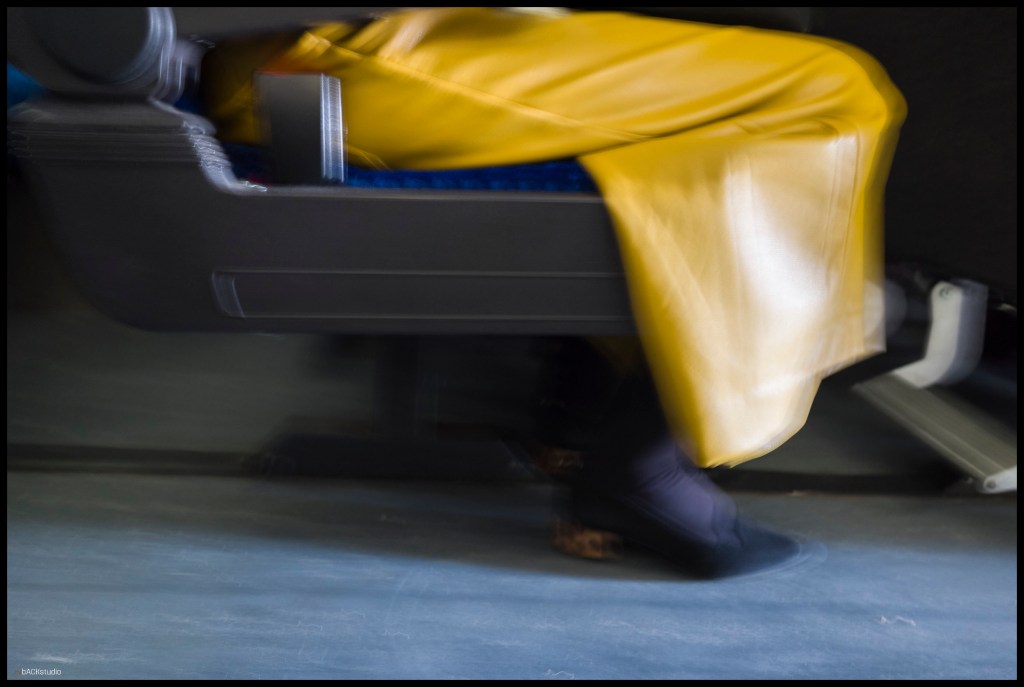
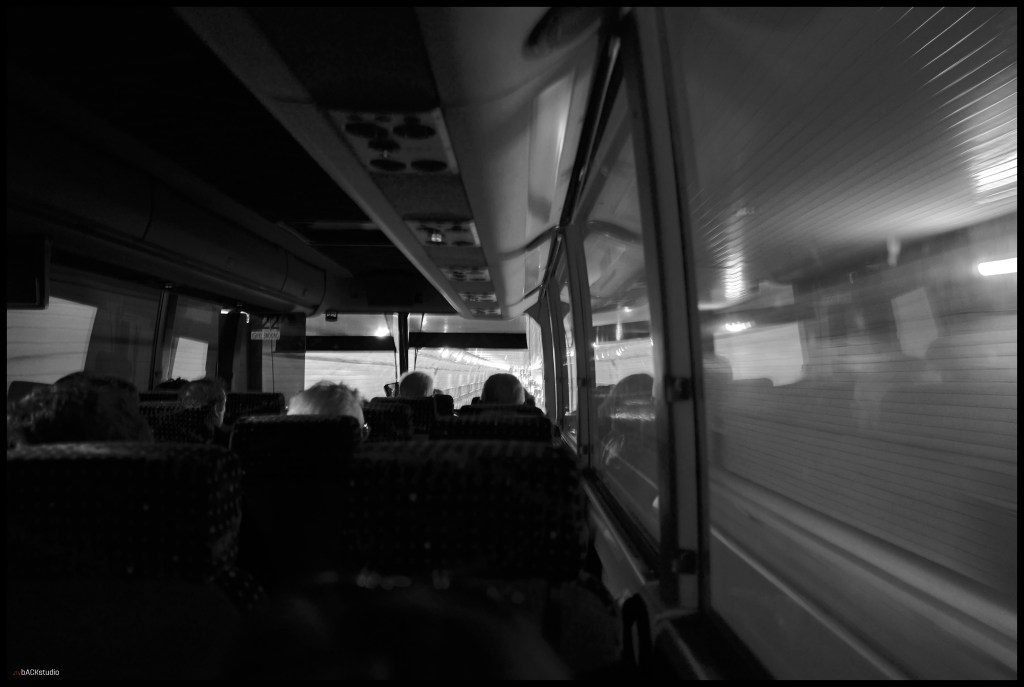
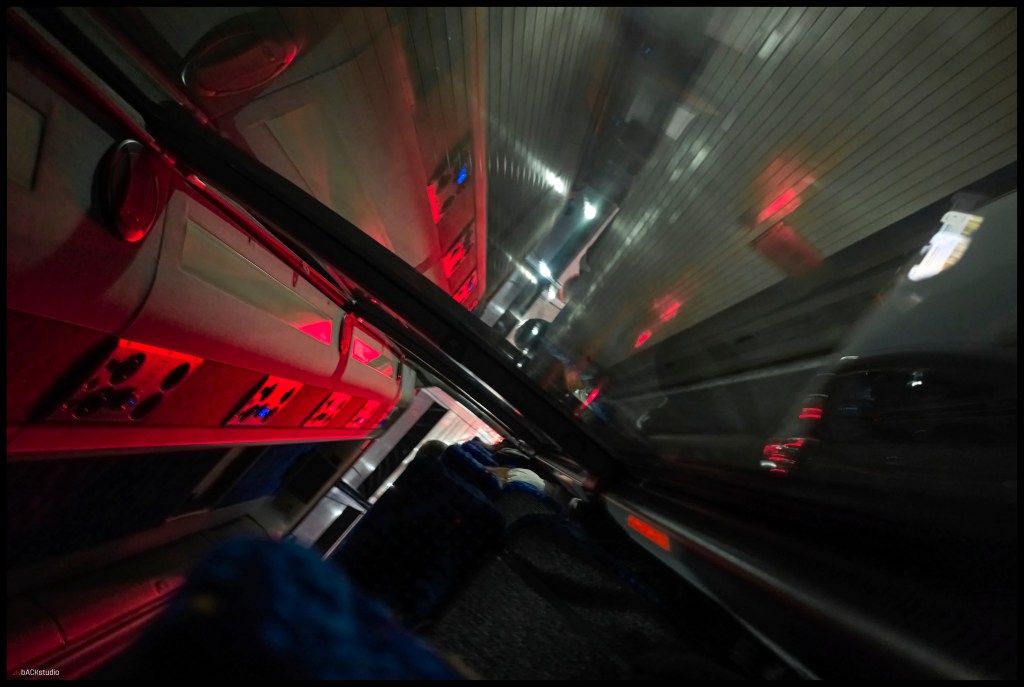
Sigma Bf 24mm DG DN
The interior shot of the skirt and shoes is a blur of movement while being seated, defying photographer’s and subject’s similar relative positions within the bus. What should be stationary isn’t. The two remaining photos incorporate internal and external scenes in the Lincoln Tunnel. The black and white photo only provides a focus in the very distance while the color photo captures the red lights reflecting in the bus’ interior, making them appear ominous. Madame Butterfly awaits.
The same concept of static space and dynamic reflection is examined here from the exterior, in which all movement is frozen, with the exception of the eye of the viewer looking at the photograph. I loved the way the brutalist facade of the Julliard School continues into the restaurant above the Elinor Bunin Monroe Film Center. Think of the beautiful music that plays inside its walls. Think of the painstaking practice and repetition by these students. Reflect upon it…
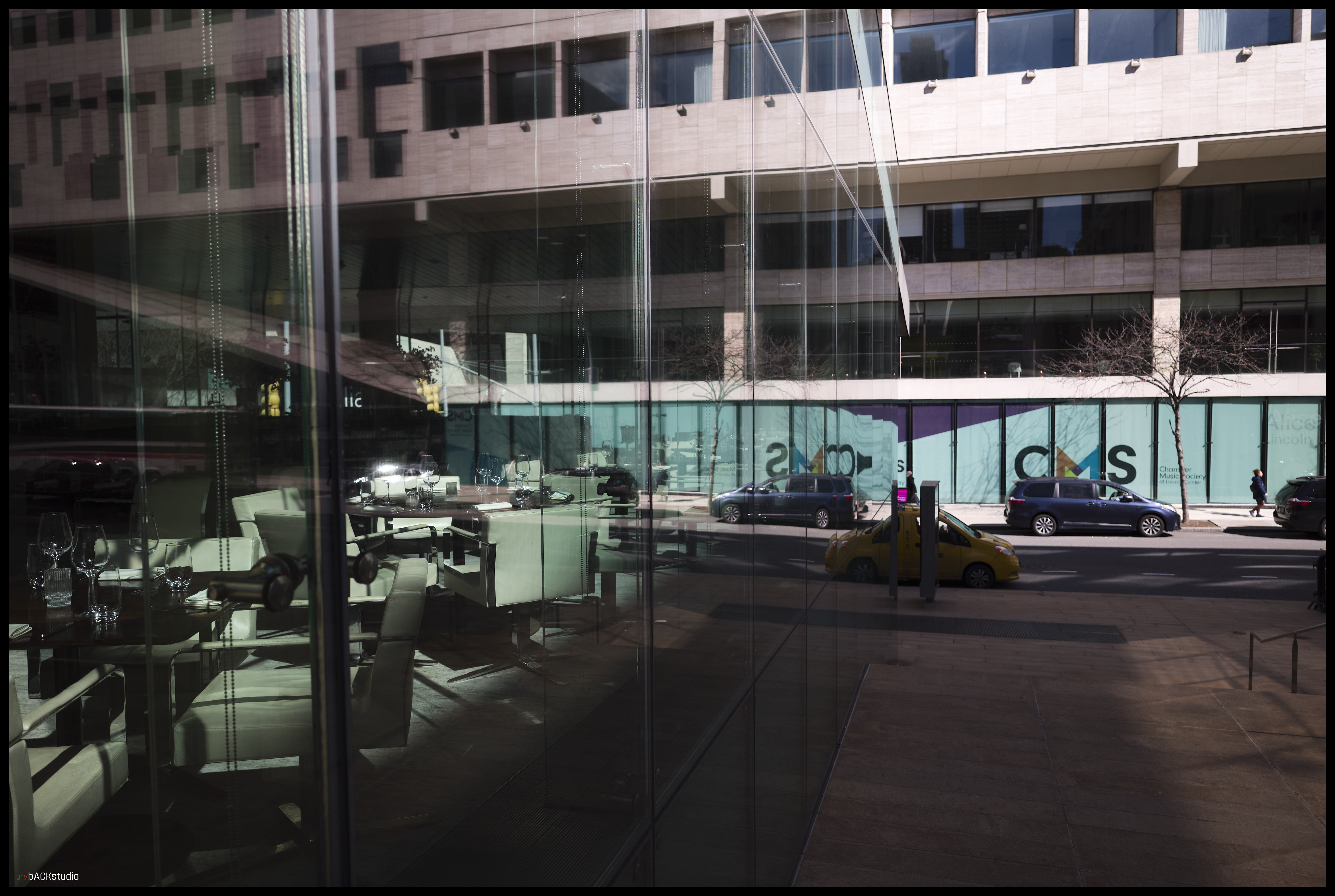
Sigma Bf 24mm DG DN
The bus arrived early, and as a result, left about 40 minutes to explore Lincoln Center and the surrounds of New York City. I chose to remain within the immediate area of the complex and examine street photography from the perspective of exploring architectural geometries and pedestrians in adjoining spaces. Color and black/white photos were used to create stark contrasts between facades, people, geometries and scale. Considering its simple symmetrical layout of buildings, there is much to be seen besides the performances at Lincoln Center. Its core is a series of three buildings, deceptively simple in configuration, which combine to create a dynamic interaction between the pedestrian and the geometry of space. Dynamics are further achieved by the elevation change from sidewalk to plaza, from landscape features and elements which must be negotiated by the pedestrian within the plaza, from multiple access points to adjoining streets and additional buildings on the Lincoln Center campus located off-axis but geometrically aligned with the orthagonal grid of the 3 main performance halls. they are temples, whether to American Exceptionalism or not, is left to your interpretation. They are not, however, innocent in their creation.
Act Two: One can choose to look in, or look beyond. The scale of the space permits both, which helps add interest of views, vistas and interactions between surrounding architecture and the view from within the space. The following images are black and white explorations focusing on geometry, texture, scale and motion.
Leonard Freed was a well known street photographer and member of the Magnum collective. Famously, he said, “A good photograph must have the element of good design: everything within the photograph has to be essential. It’s never like painting where you can have it perfect. It shouldn’t be absolutely perfect. That would kill it.” If I was to try and read into this statement, I would paraphrase my interpretation as the following: a photographer must use restraint to supply a critical amount of information in a photograph for it to tell its story. A story which must gracefully embrace its flaws to provide an added authenticity to its telling. Were these successful? Not so much.
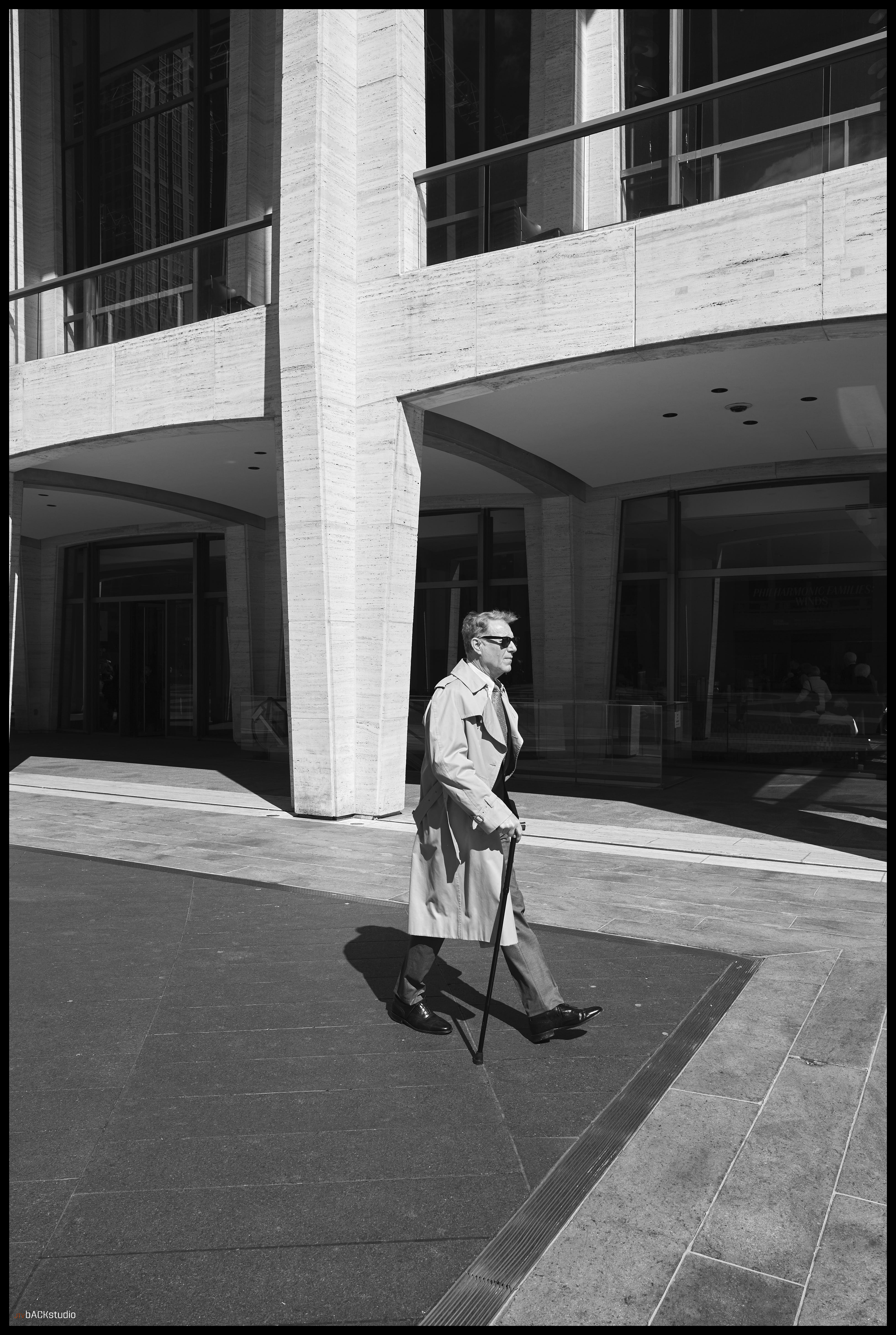
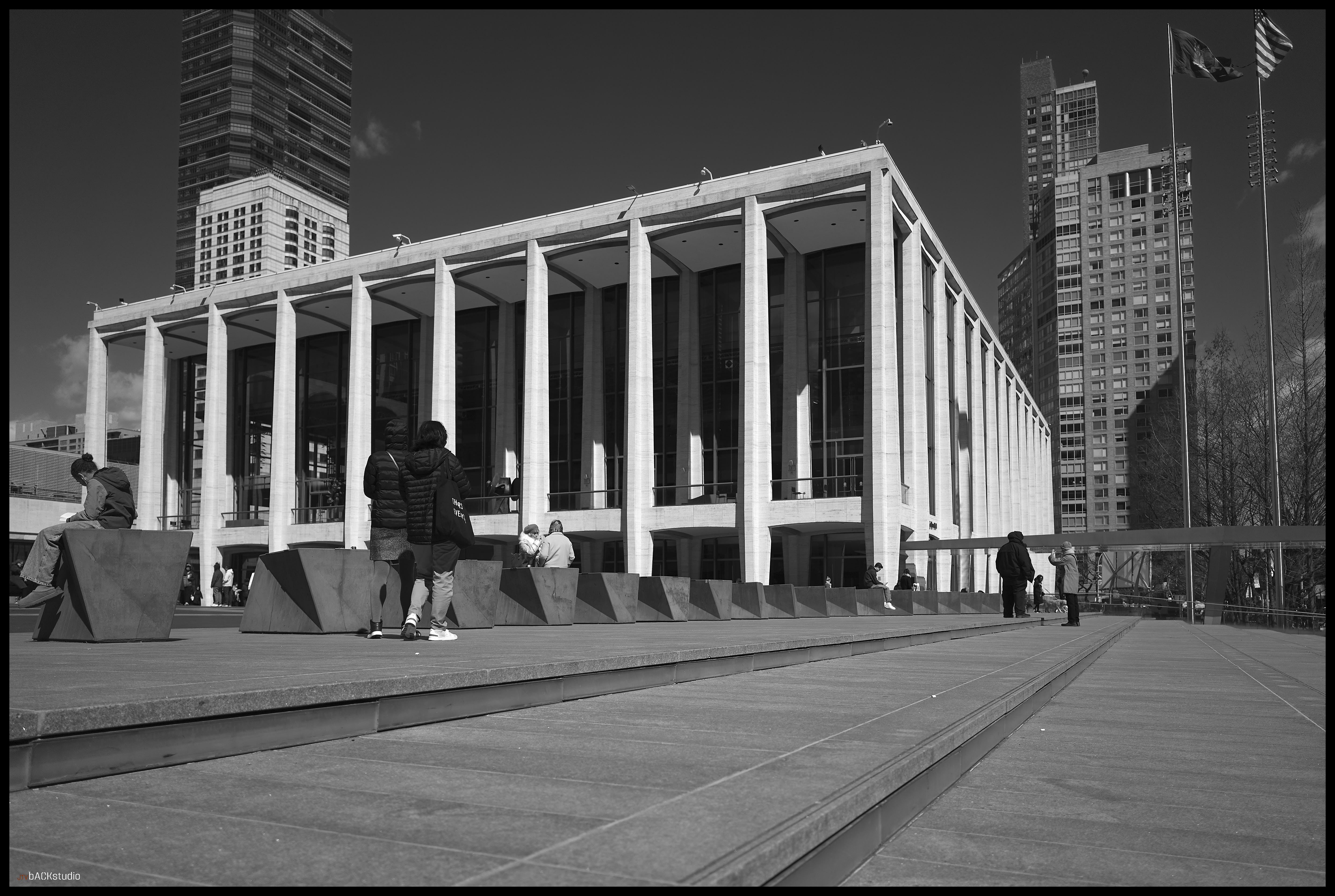
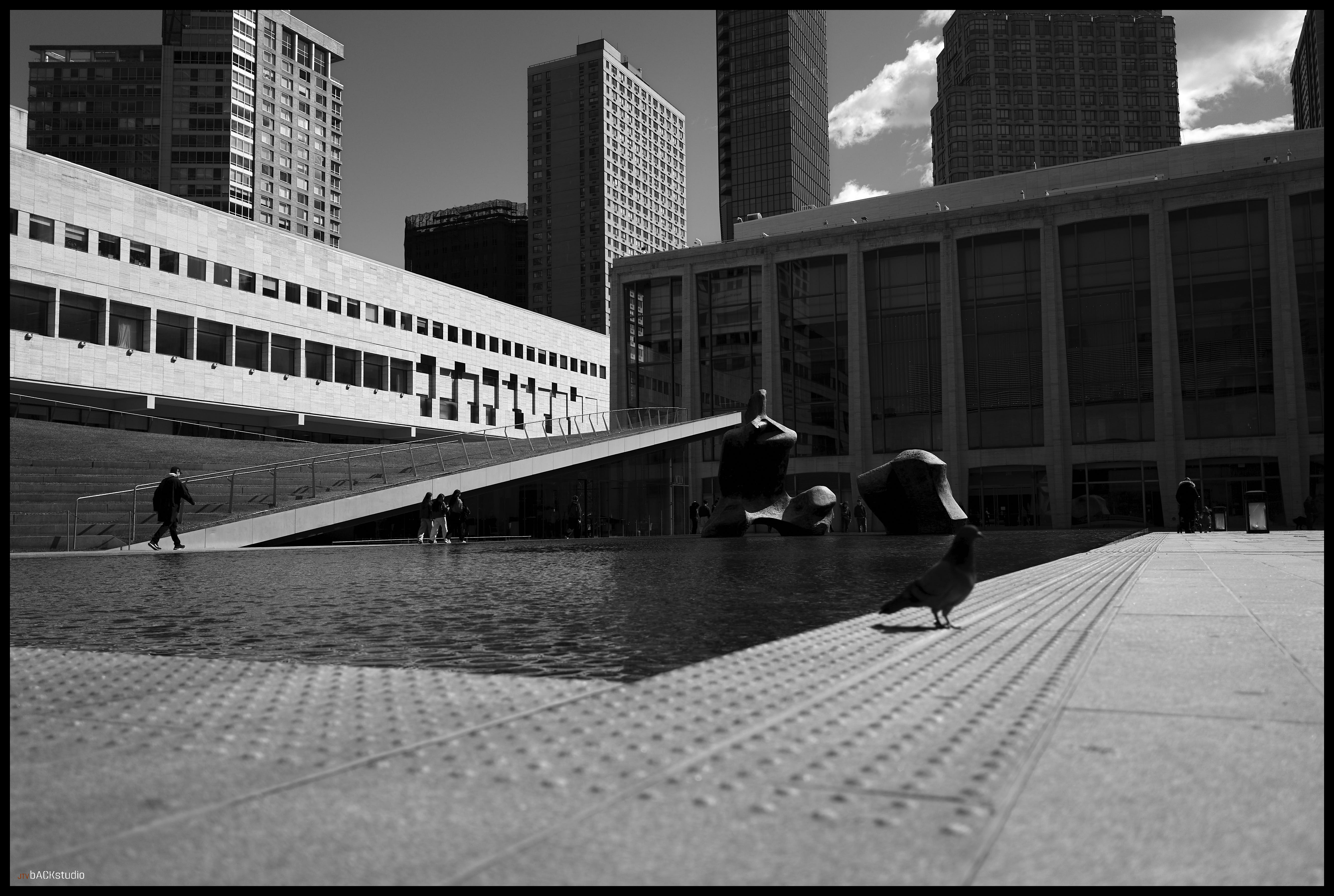
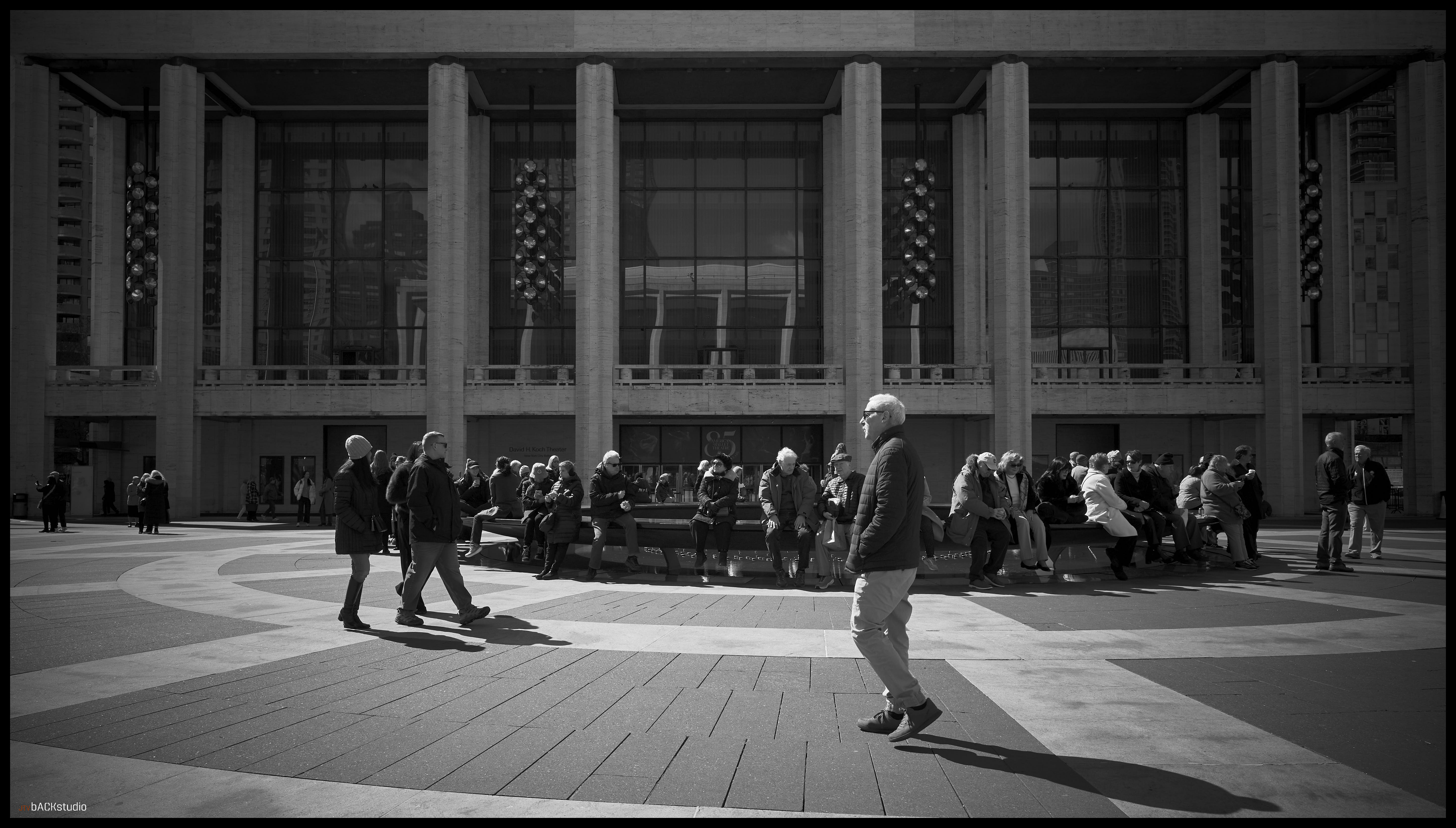
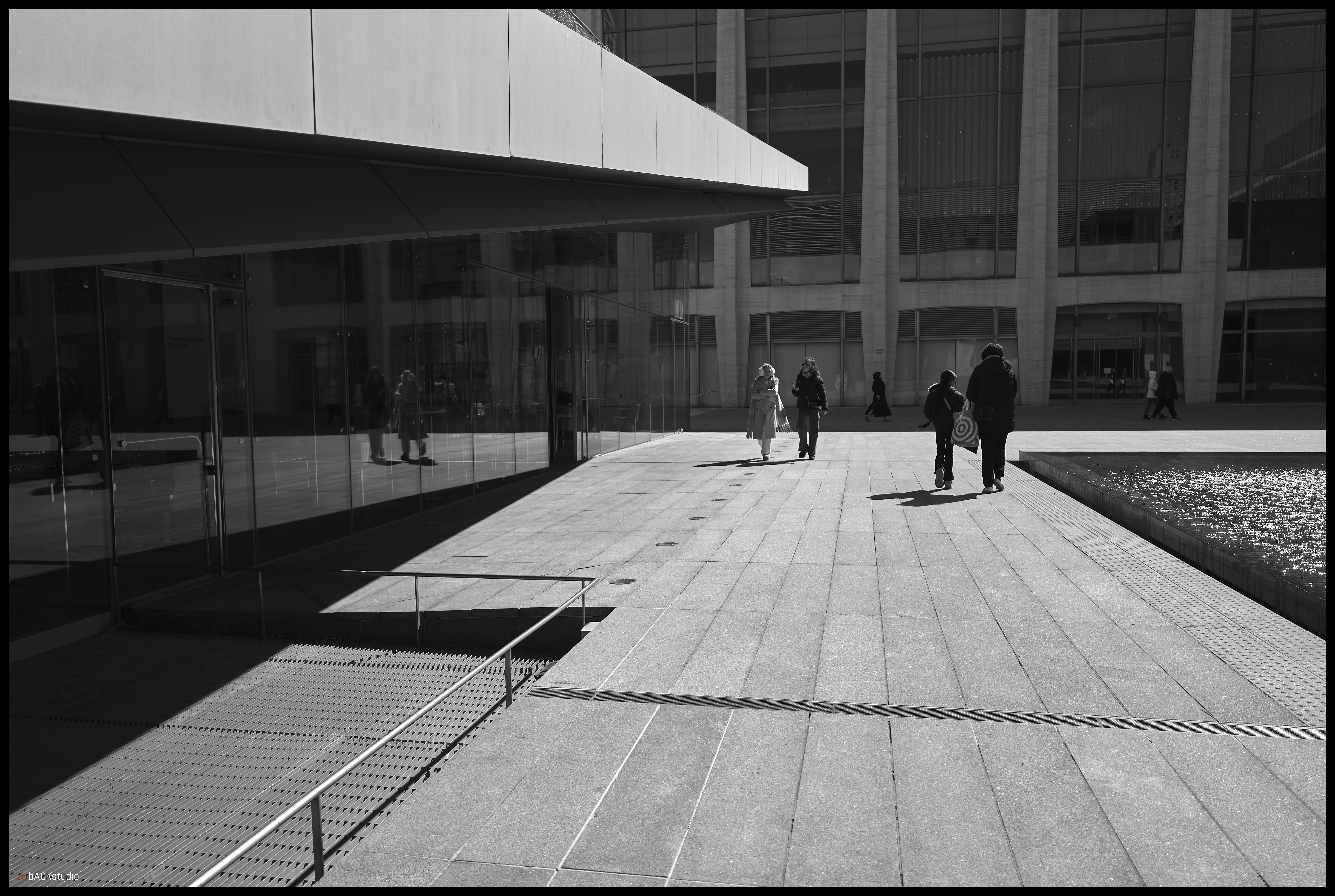
Sigma Bf 24mm DG DN
For the next set, I tried to intentionally incorporate color into the mix, using it to clarify the photo by providing additional information. The focus on these photos was to capture reflections, people, color, and angular perspectives to create a sense of scale, ambivalence, repose, dynamics, and perhaps, a revelation of what can be sometimes overlooked. How a pigeon can be isolated in such a busy public space. How a drained fountain can still provide reflection for those near it. How a canopy and building with simple geometries can create unique perspectives when viewed from below. The way a layered facade humanizes what would otherwise be a stark building facade.
By lightening the shadows in the David H. Koch theater facade in the photo below, I have tried to lighten its presence. Note that most pedestrians remain in the sun (to stay warm) and away from the facade. A summer’s visit awaits for this thesis…
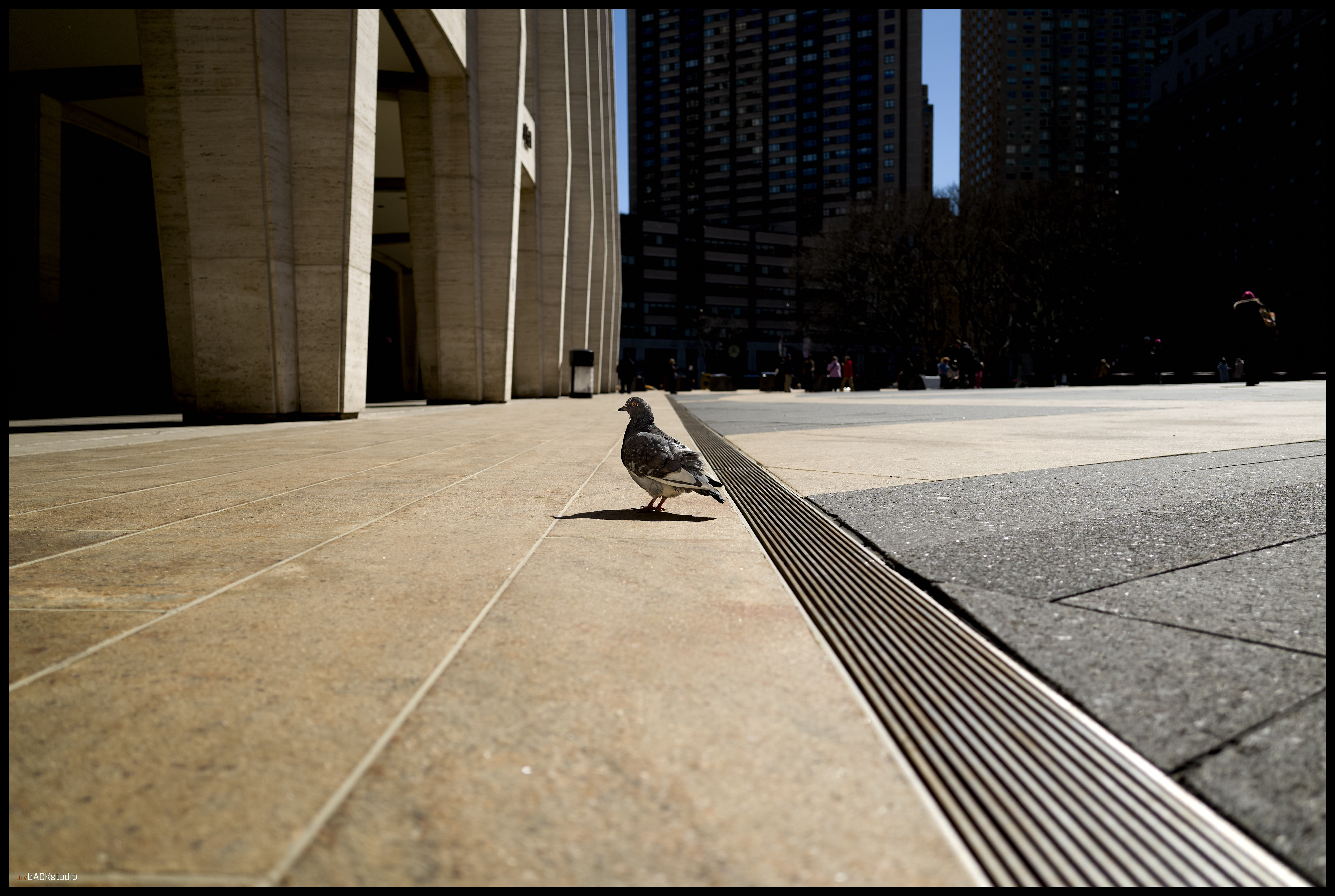
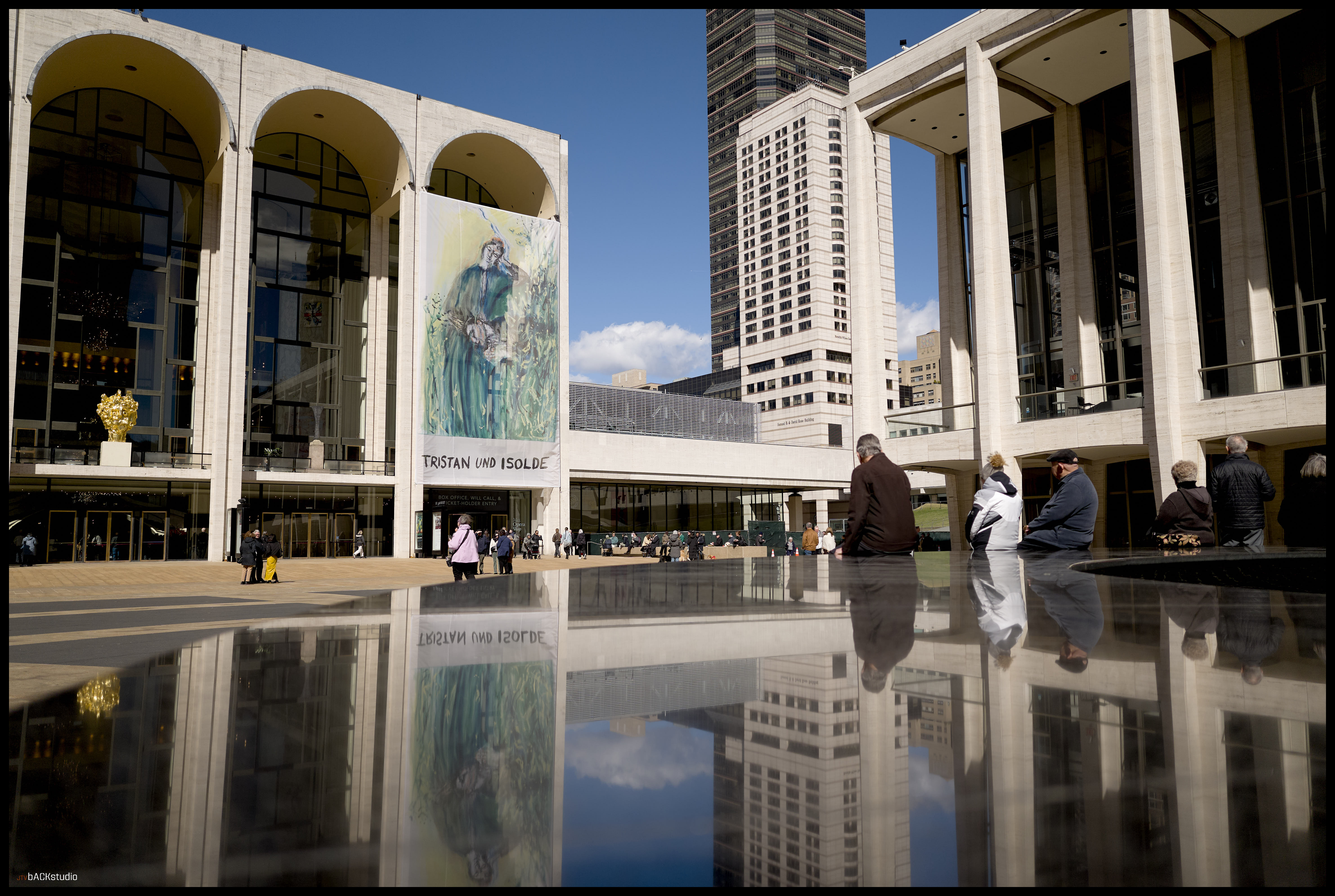
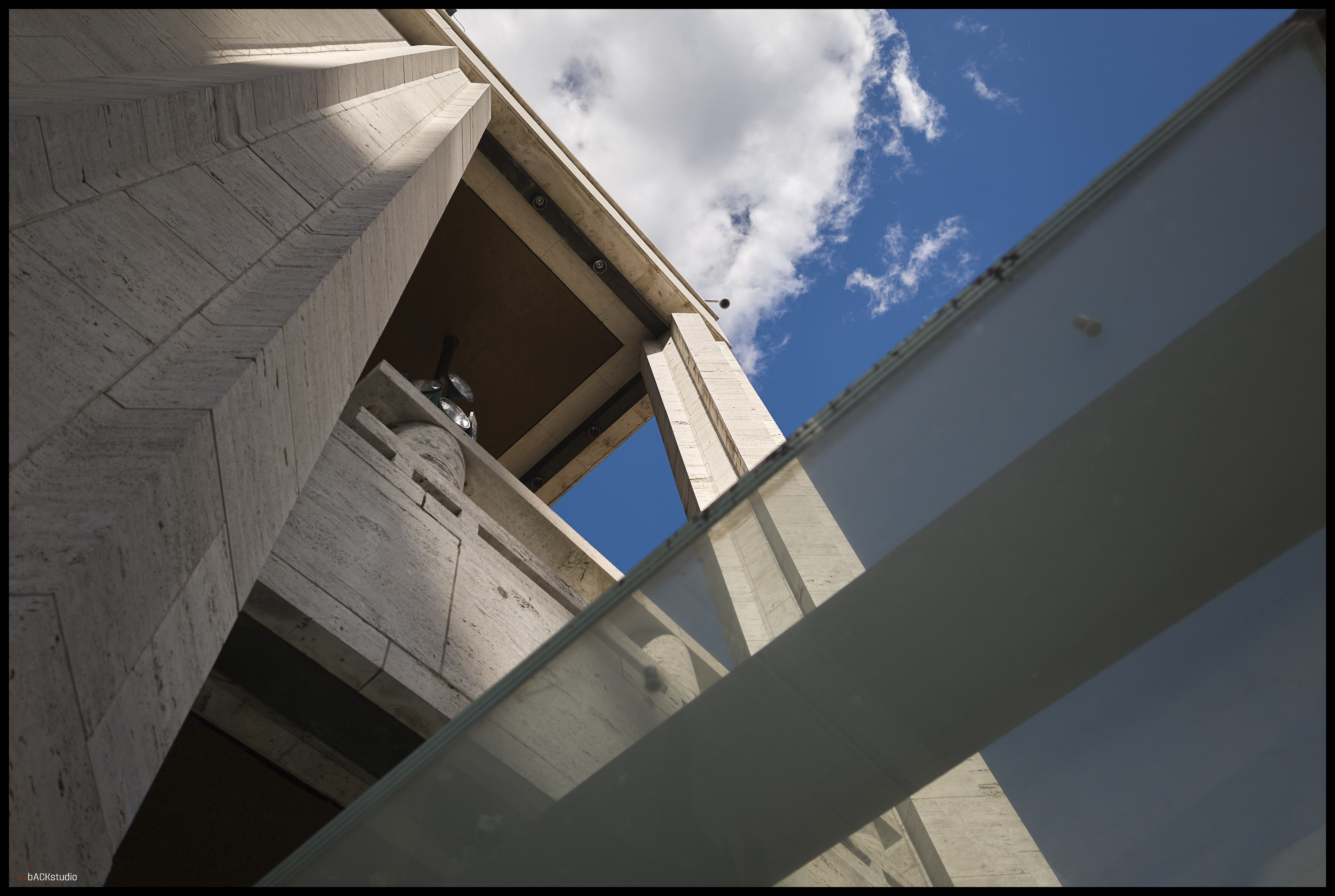
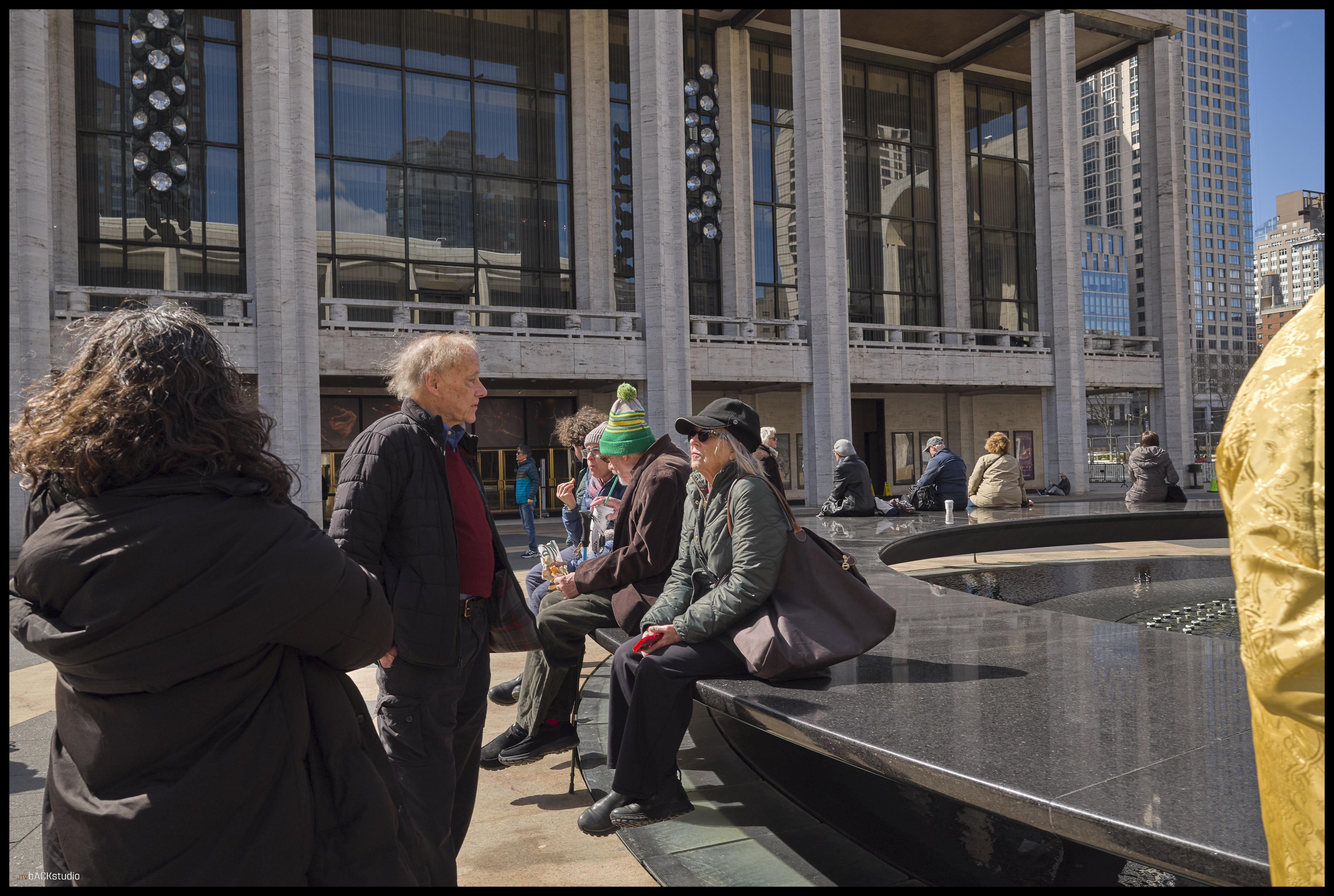
Sigma Bf 24mm DG DN
Act Three: The geometry of the architecture itself becomes the main focus of the space, its scale, combined with its overpowering organization of symmetry and prominence in the street becomes almost a temple to the arts. What does this reveal? Alienation? Elevated purpose? A modern isolation paying homage to the arts or a godless universe? There is something overpowering in these buildings, almost fascist in its reinterpretation of the strict rules of classicism in conjunction with its severely restrained ornamentation and grand proportions. Almost. A fine line between Albert Speer and American Brutalism. The difference? Elegant proportions, layering of facades, detailing of columns, contrast of different materials, the play of shadows and light…
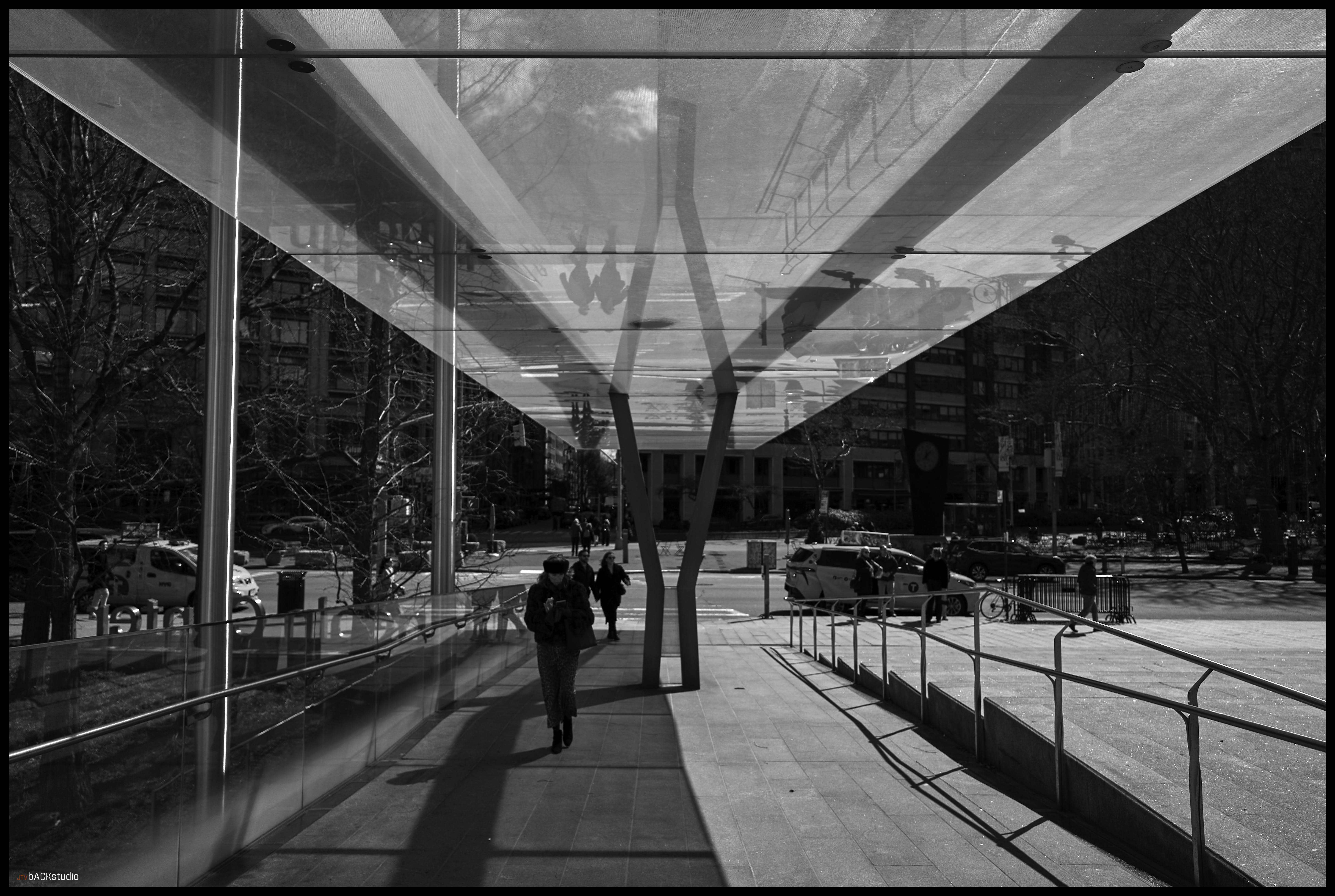
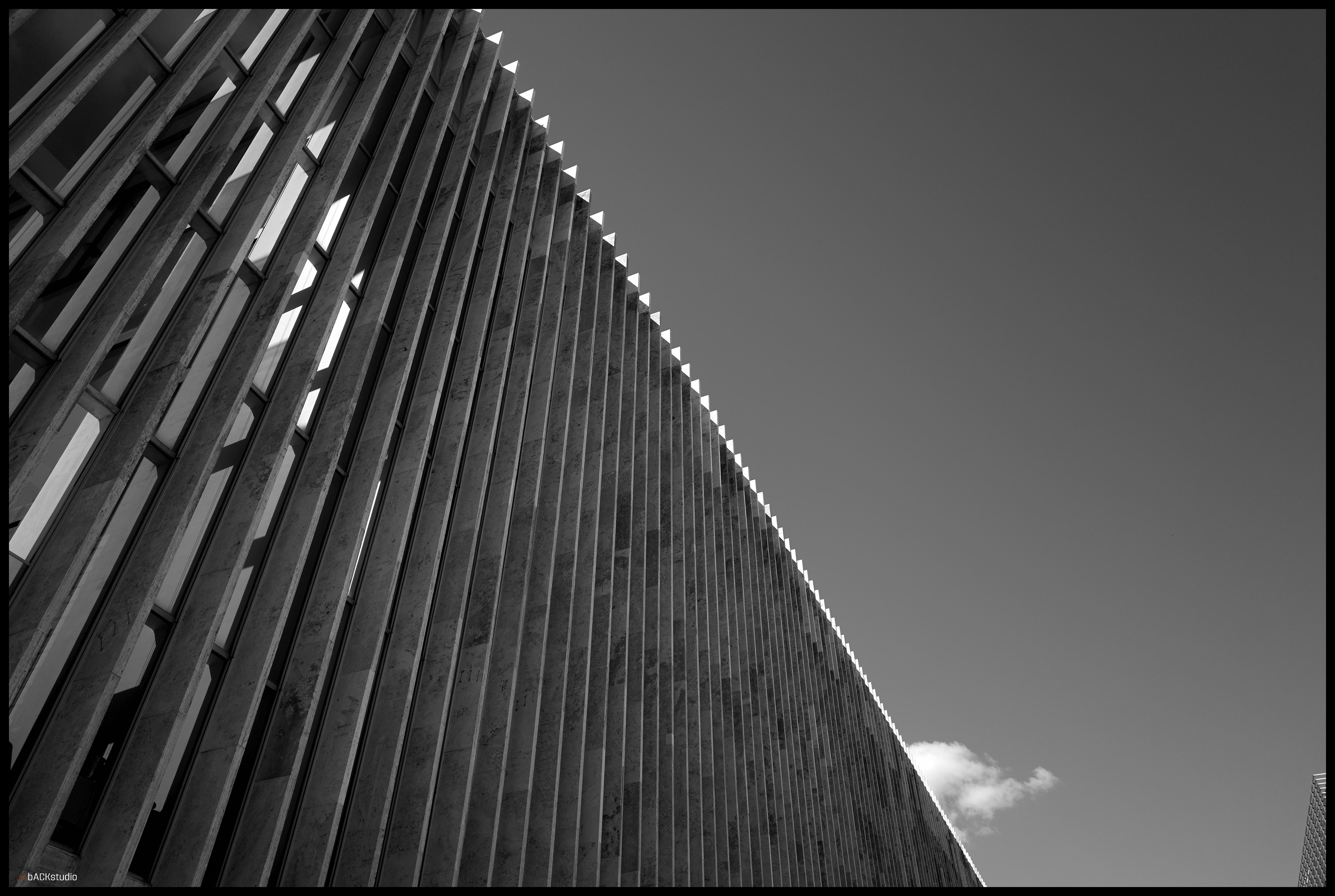
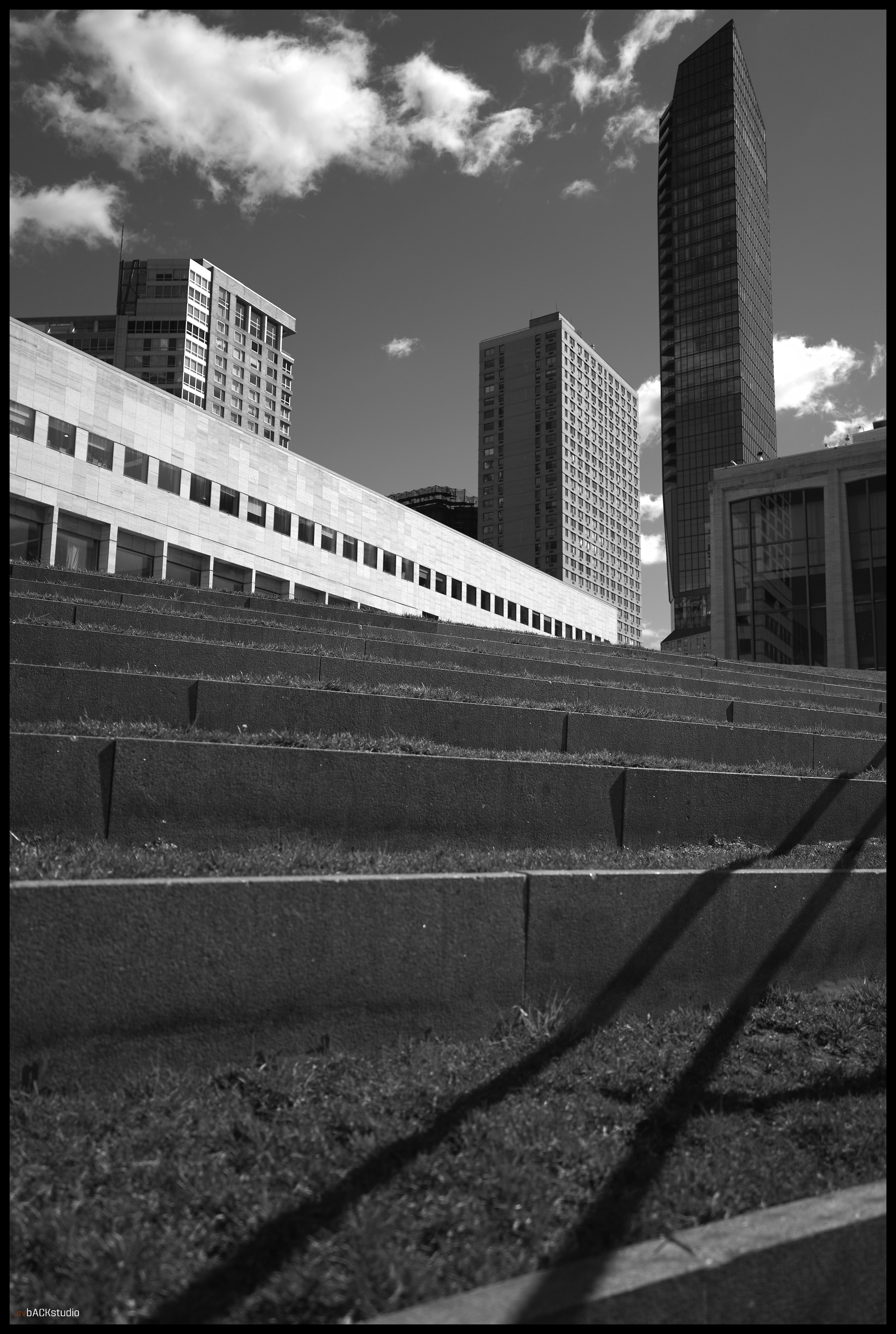
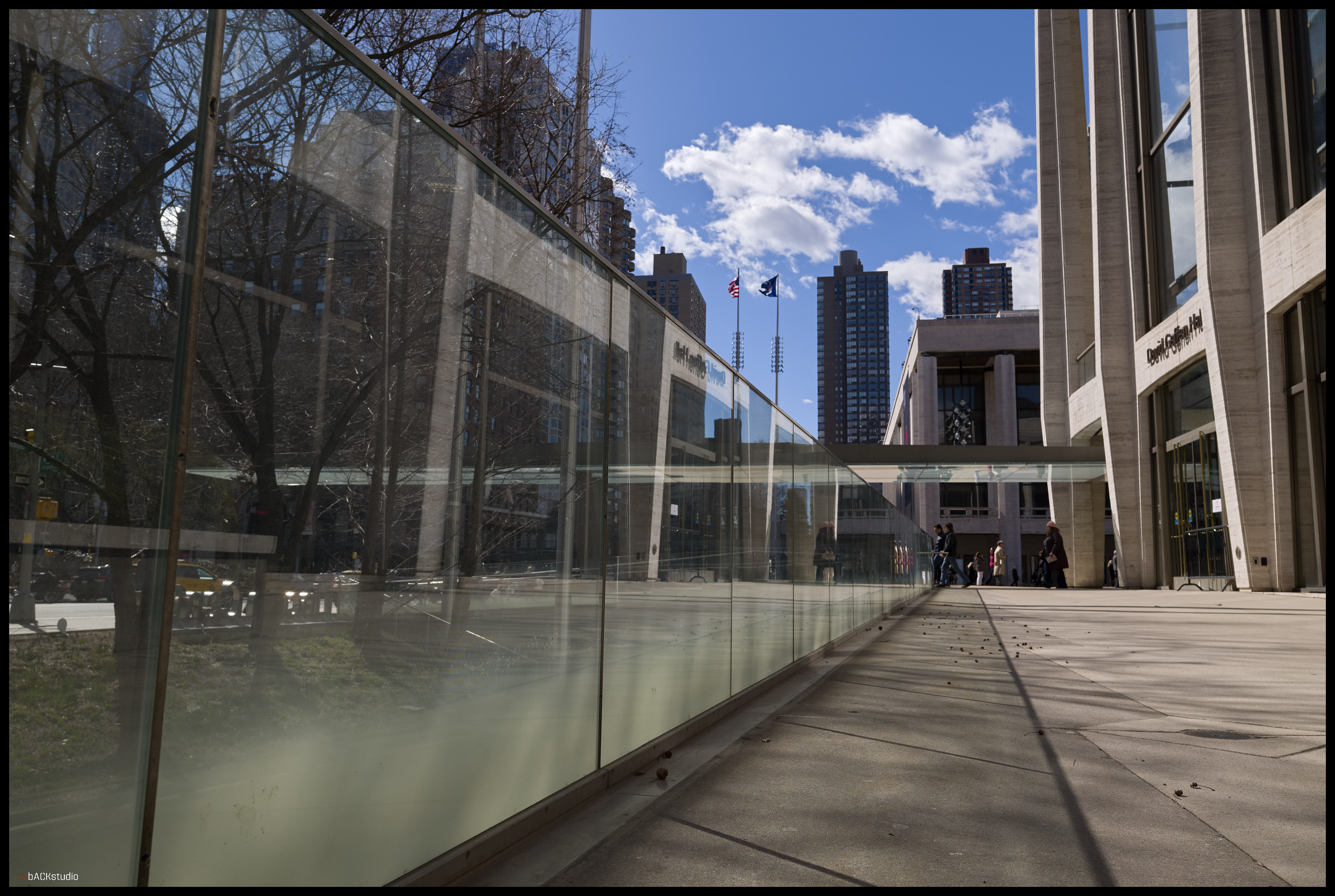
Sigma Bf 24mm DG DN
I chose to shoot this space with the 24mm DG DN Sigma lens as noted . The wide angle permitted me to include the surrounds and architecture with little distortion while providing leading lines and adequate detail for textures and surface information.
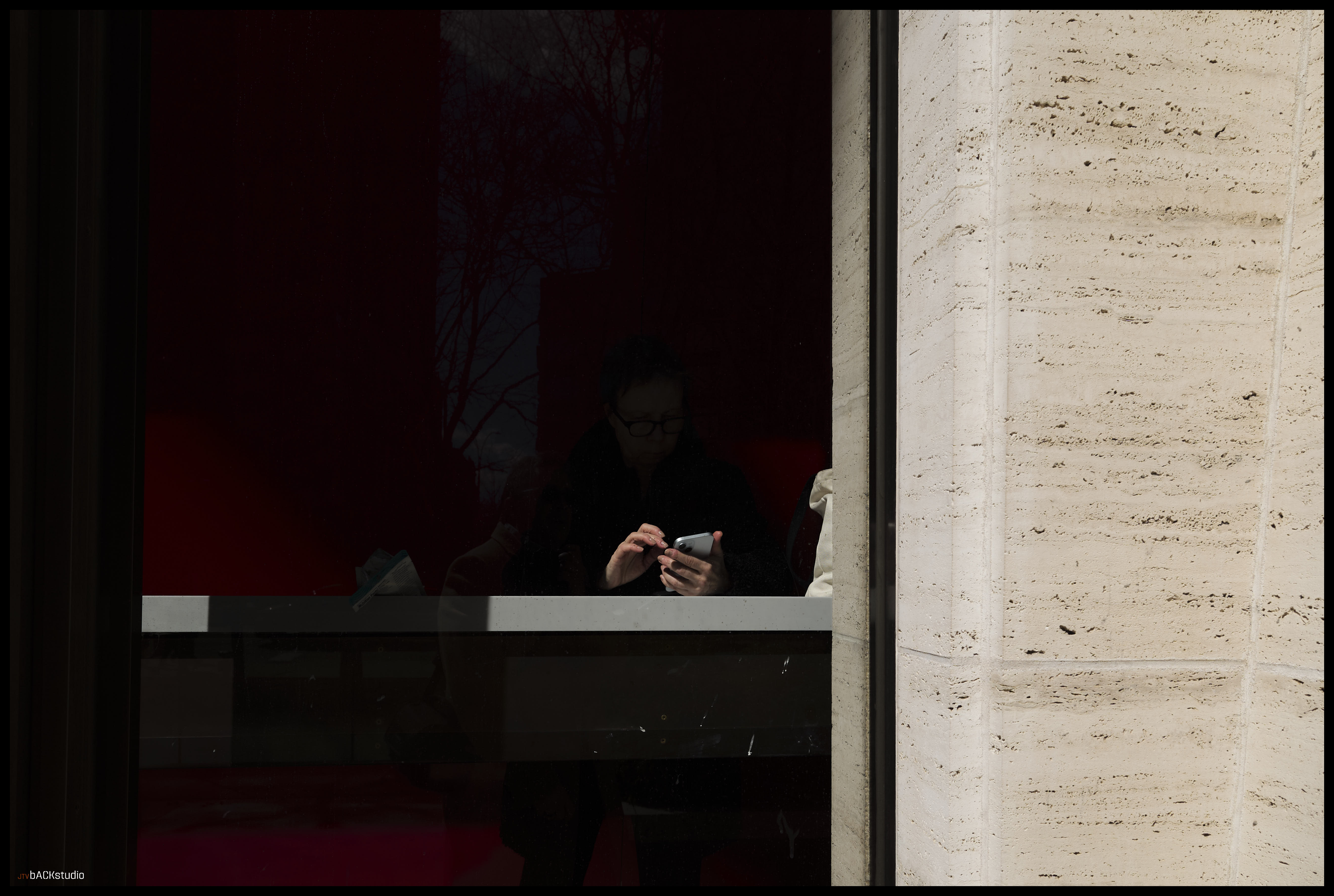
Sigma Bf 24mm DG DN
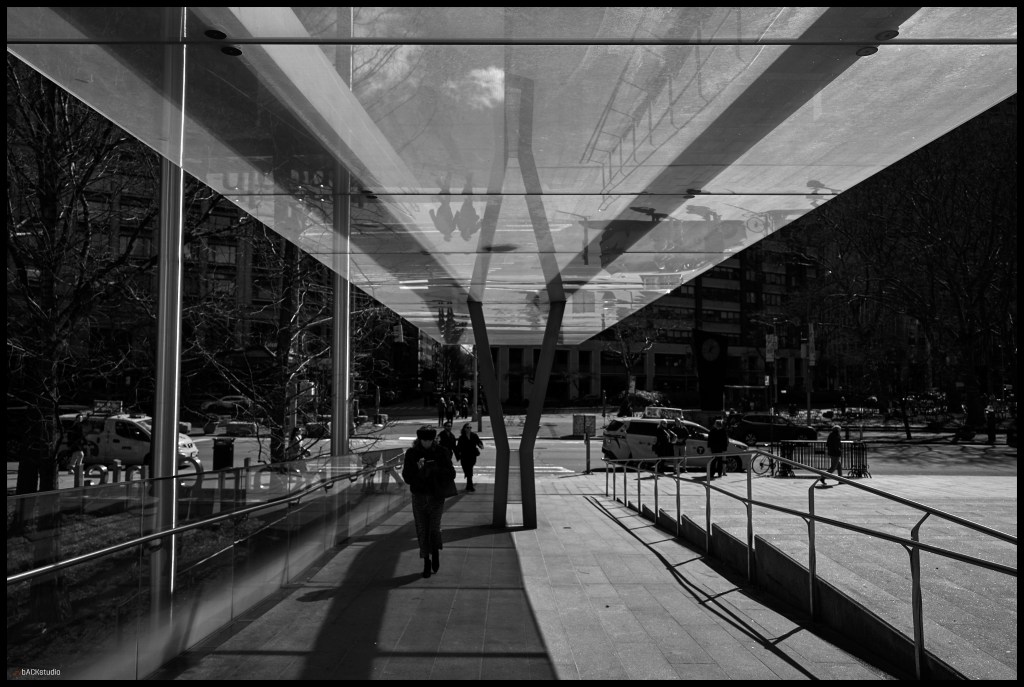


 Amateur in photography. Amateur in life.
Leave a reply to James V Cancel reply