
“The definition of insanity is doing the same thing over and over again and expecting different results.”- Rita Mae Brown
Recently I have been culling through old photos and came to the conclusion that my photography, and its subjects, hasn’t dramatically changed in the past 10 years. It’s as if I am a mad man, repeating himself, and expecting different results. The Mad Photographer revisiting his photographic topology without recognizing he is also creating a photographical tautology, if you will.
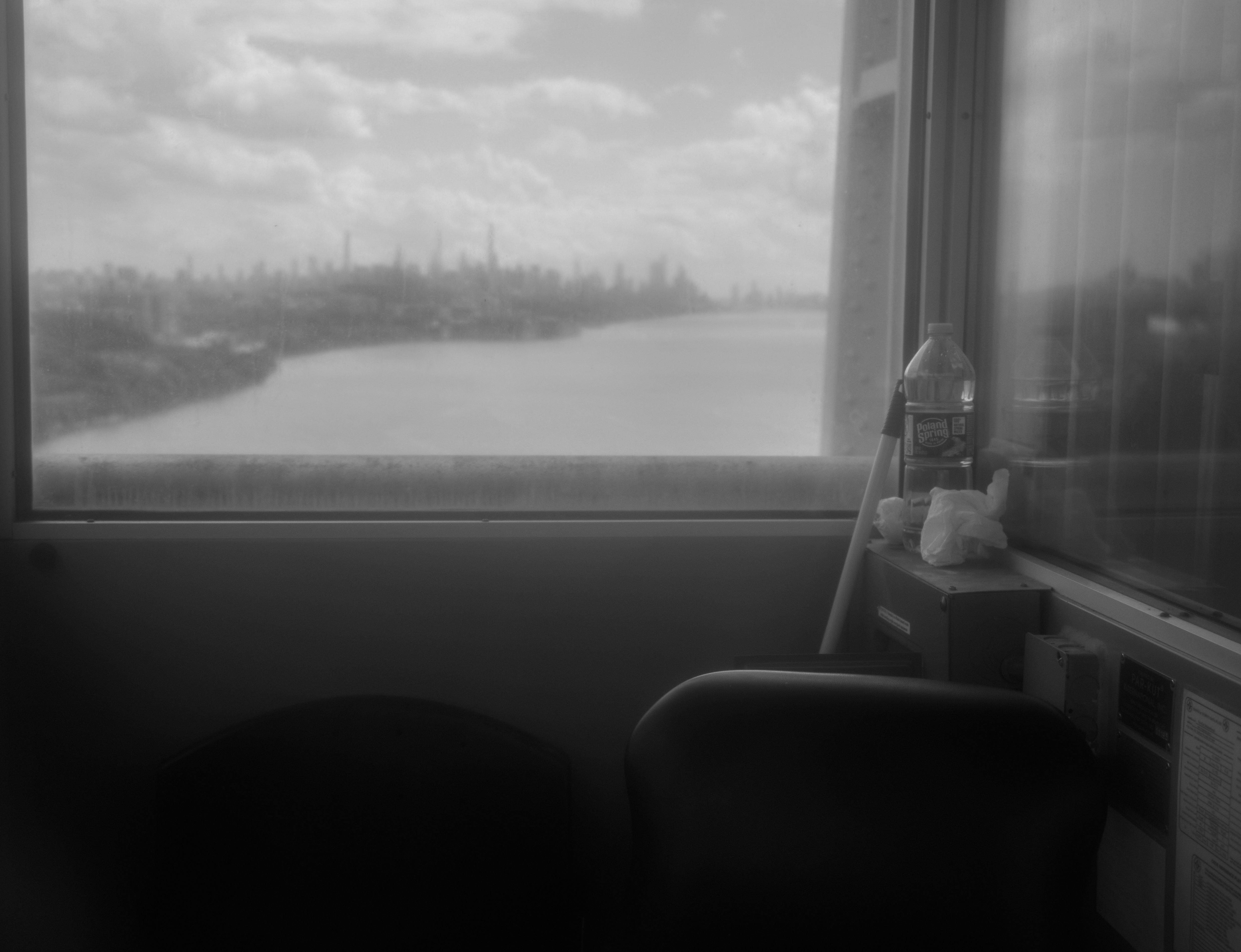
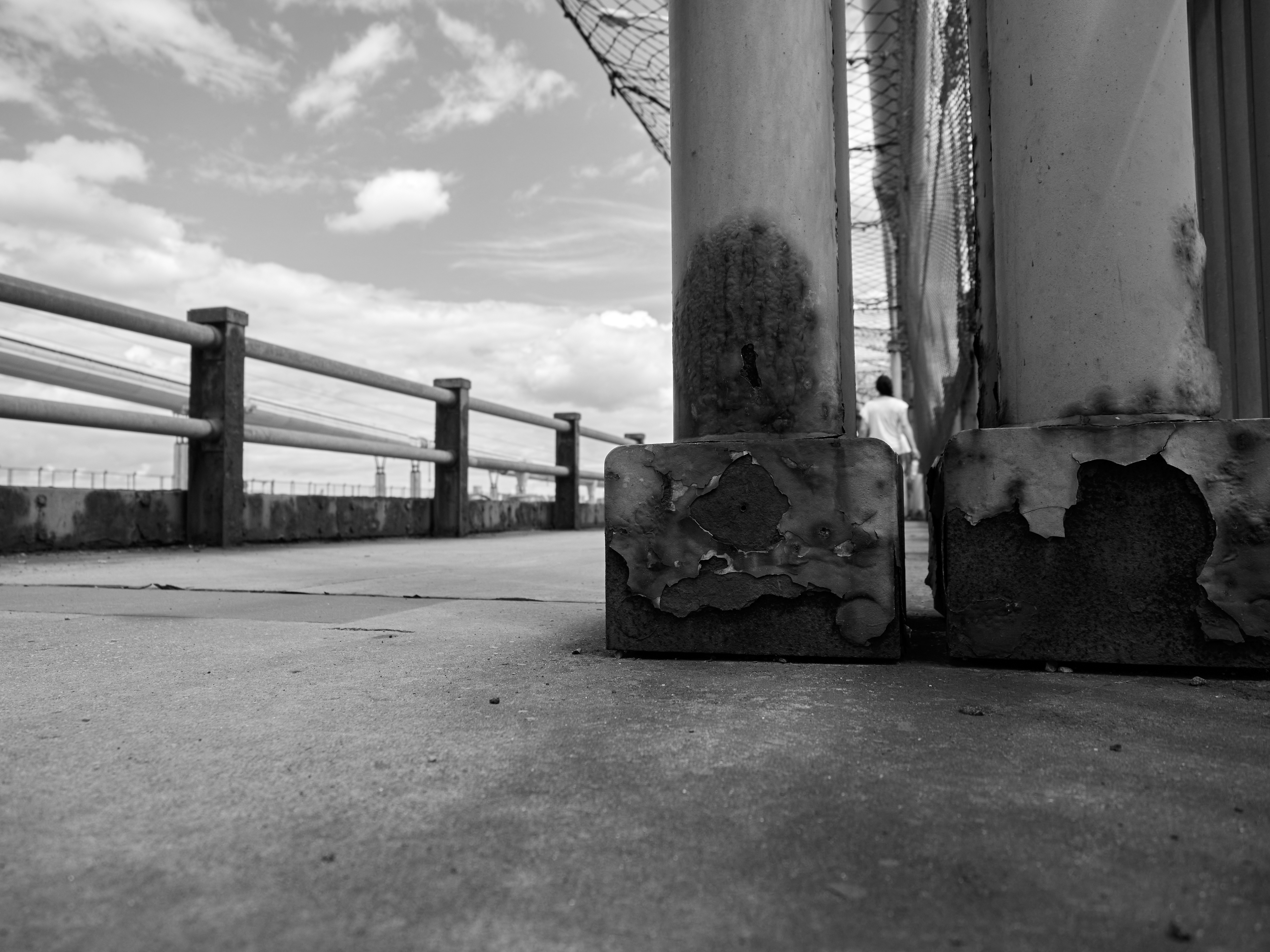
Original Security Booth, Detail of Rust and Erosion from 2021
Can photographers achieve different results from repetition? Can we defy the conventional wisdom of futility (madness), often mis-attributed to Albert Einstein, and instead, shed light on (according to AI) what has been the process of repetition as an aid in addiction recovery and/or problem-solving? Direct our efforts towards providing existential answers?
I wonder what AI would suggest for someone whom is addicted to problem solving?
Are we as photographers really trying to solve problems when we take a photo? Some could argue the technical process of photography is a form of problem solving (lighting, contrast, noise, shutter speed, etc.) but my take is that these describe the parameters we use to employ our tools for the purpose of capturing a vision. Perhaps, instead, photography is employed to solve the singular problem of constructively using up our limited time here on earth for making ourselves happy or our lives better? This selfish motive is masked in some way by the legacy left to the rest of the world: fleeting moments of captured visions meant to be inspiring, provide meaning or a form of remembrance. But how selfish really? Do we remember the photographer or the picture itself? So perhaps, in a twisted exercise of logic, photography, is a way to solve the problem of making our lives more enriching or better for ourselves and others. Perhaps that is just a regurgitated definition of Art, and if we agree that’s the case, I’d say we’re on to something. And if photography could achieve these things, should the process be taken so nonchalantly, even if just for a quick snapshot?
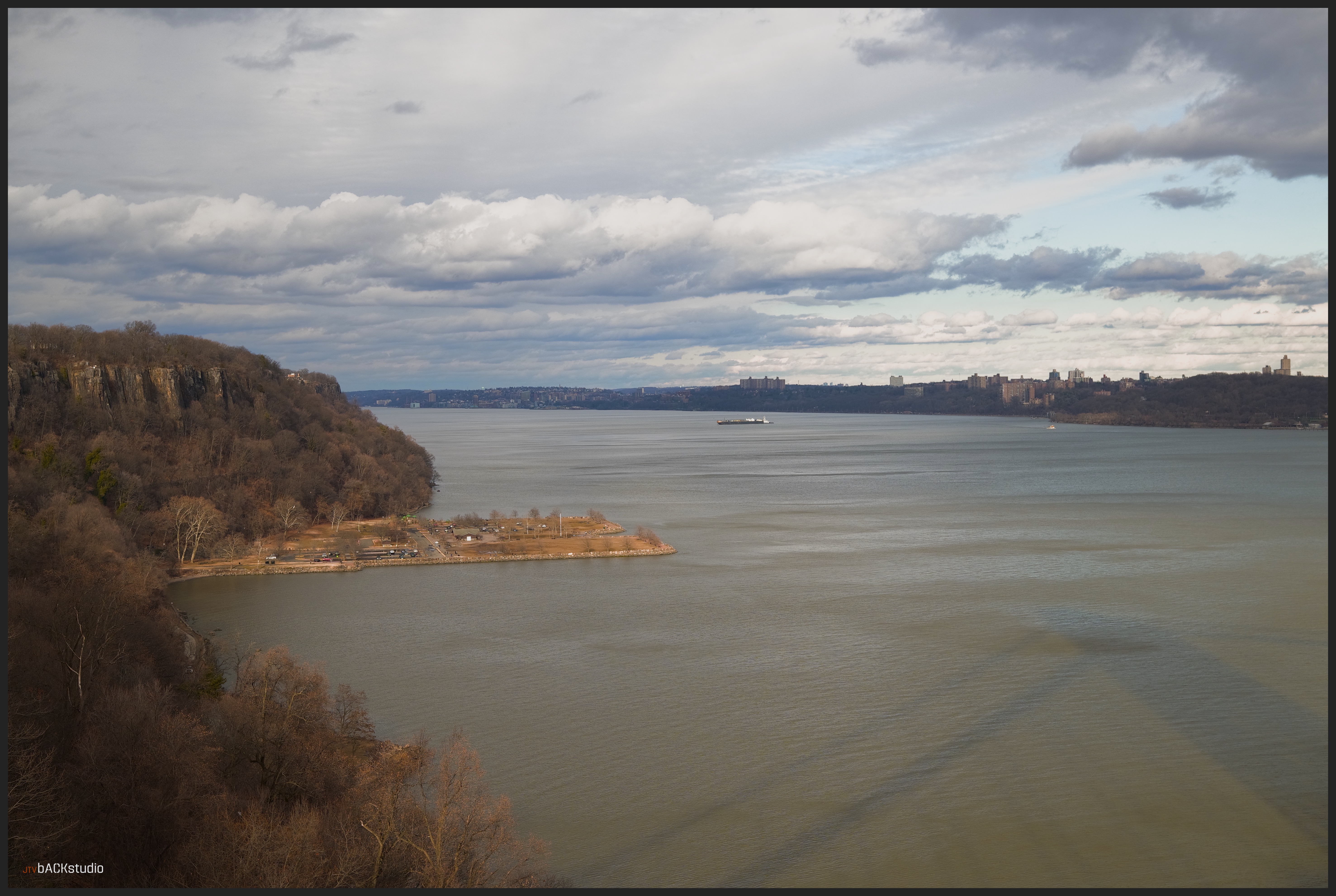
Shadow of NJ Tower, Hudson River Viewed North
Perhaps we revisit once-photographed subjects because we think we can uncover something different about it/them? Gain more insight into it/them? Better document it/them? Create something more interesting and inspiring with it/them? After all, do we ever see something/someone the same way twice? Is that even possible? (Hint, no it isn’t.) Things change instantly, and photography can document that change. Sometimes I apply anthropomorhpic attributes between inanimate objects and people in photography. I speak of objects as if they are subjects in the traditional sense. As if these objects or structures are sitting for a portrait. No great surprise, then, that I liken such an approach to photography as the creator and cinematographer of Woody Allen’s movie, Manhattan. I believe (and it isn’t much of a stretch) that Manhattan is filmed in such a way as to make the city’s landmarks perform as actors in the film, with silently spoken (can there be such a thing?) roles. It is named “Manhattan” after all, and the opening shots of its skyline, bridges and spaces is more than a hint…just saying. (The cinematography in this film has never been bested in my opinion, tough to admit considering who wrote and starred in it, I know).
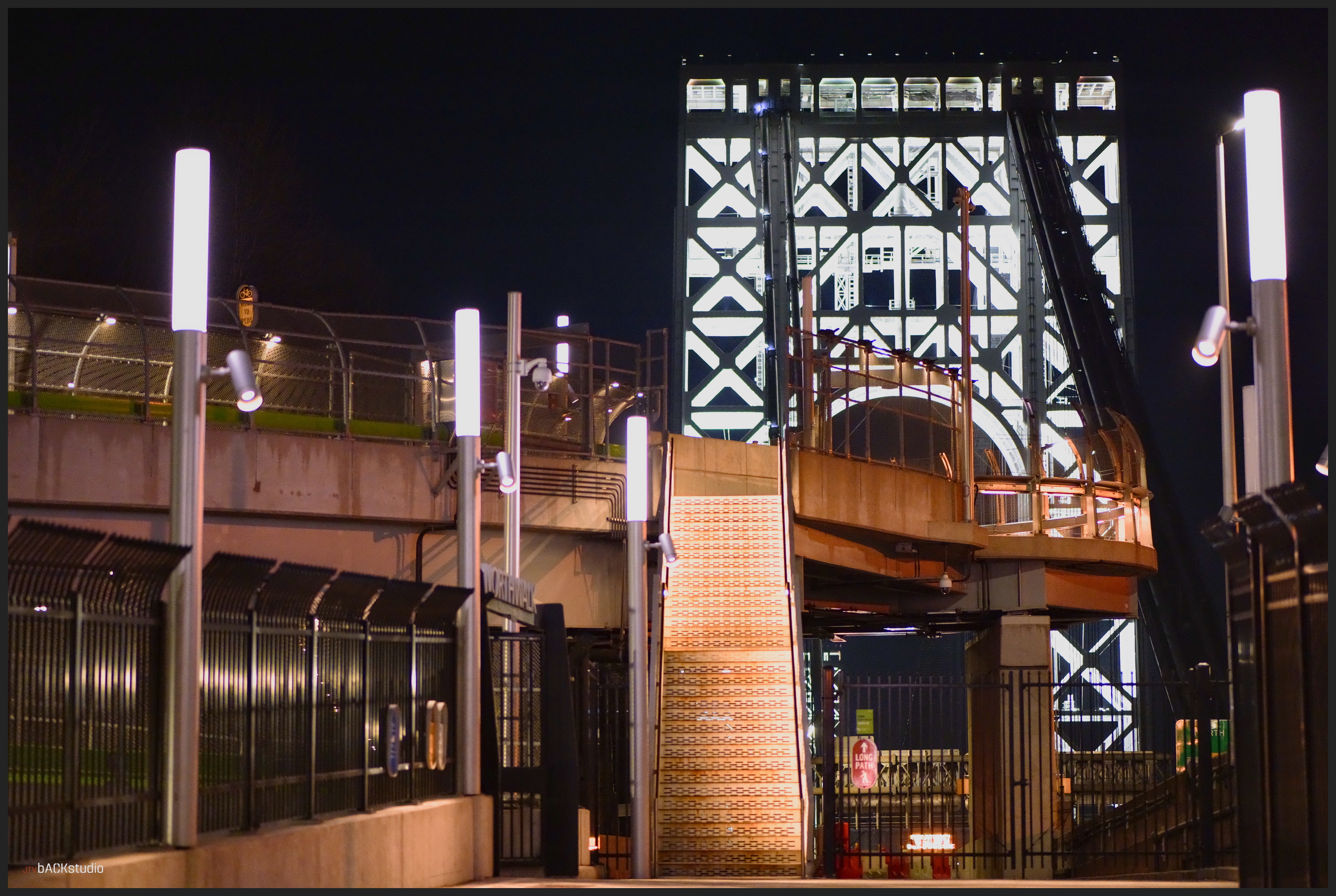
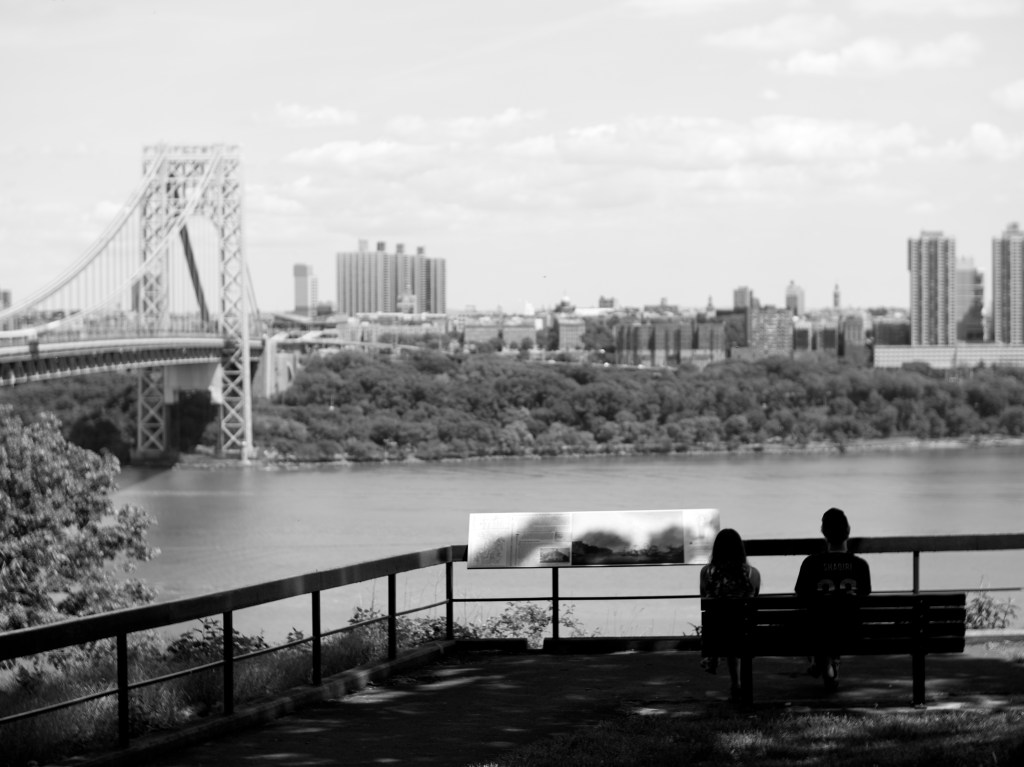
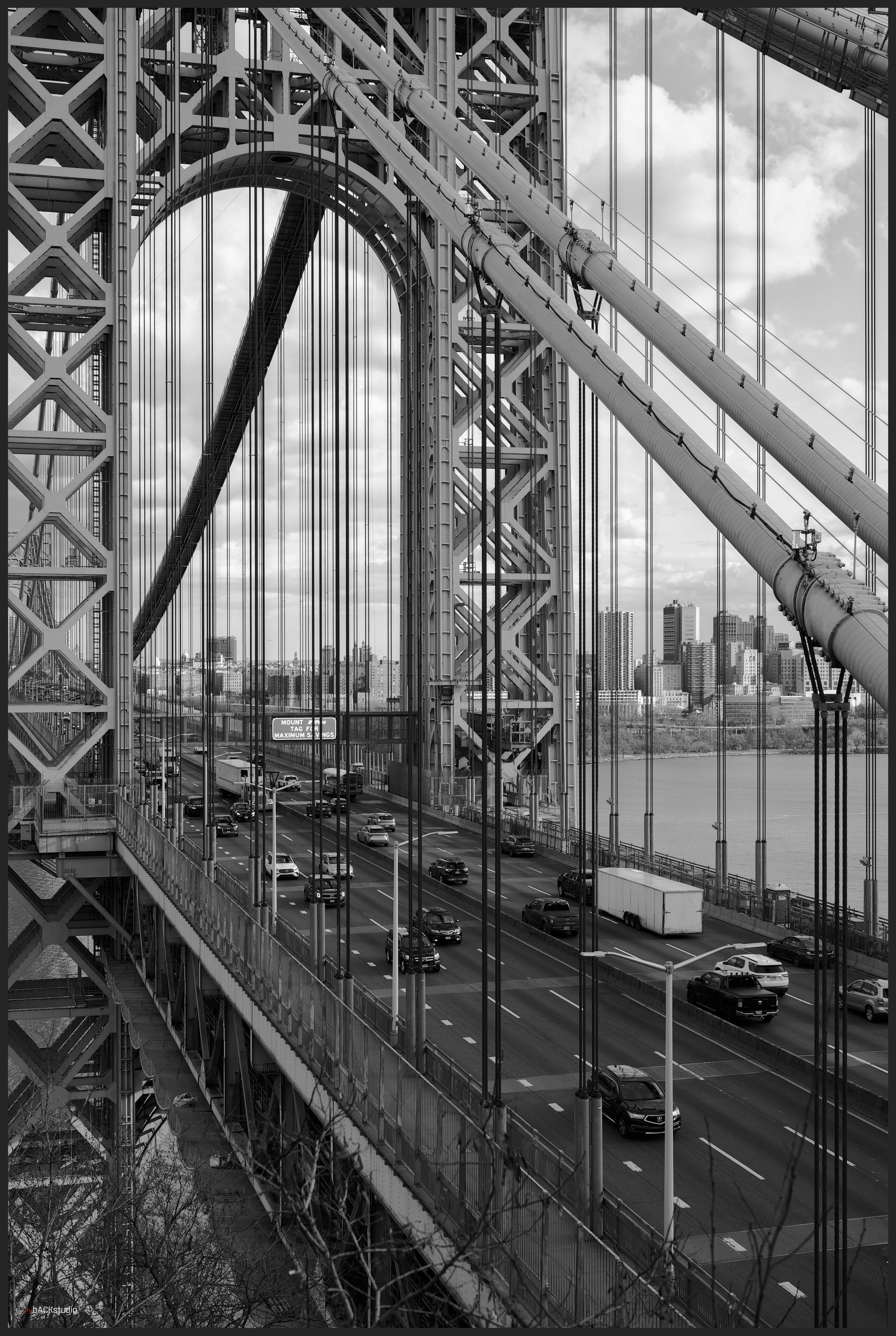
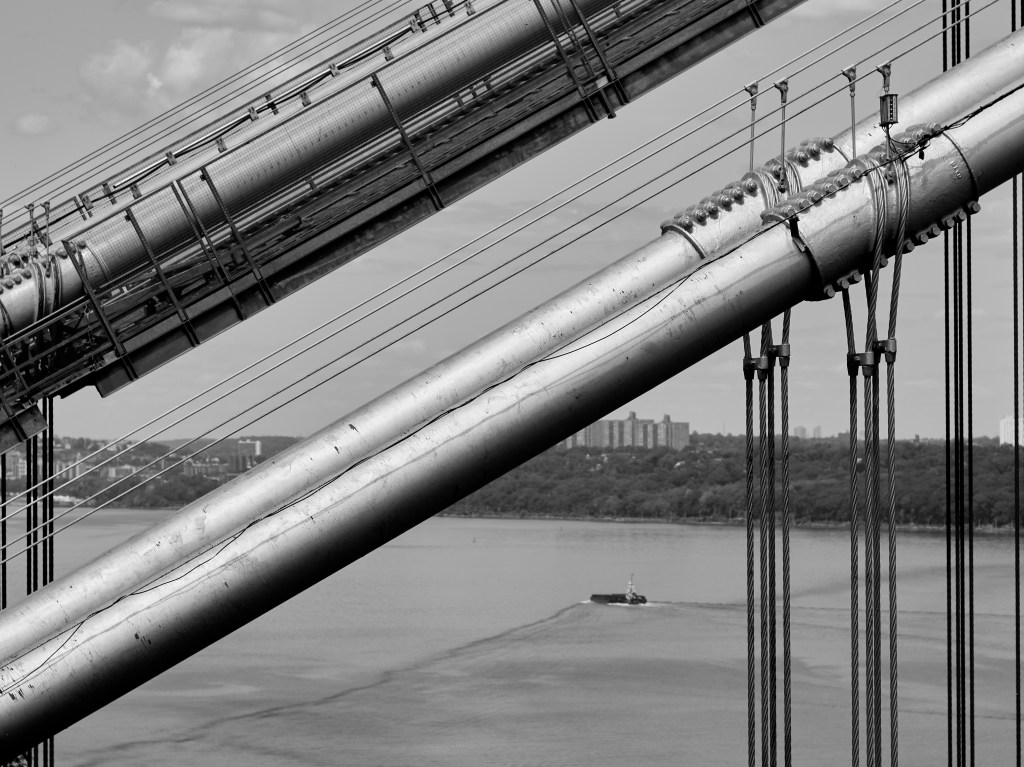
Did I mention structures? I have photographed the George Washington Bridge on several occasions. It is a unique structure in several ways. The first being its construction: The bridge construction was started just before the Great Depression. Its conclusion came during the Great Depression’s peak. As a result, the design of the bridge was changed to lower its cost. Originally intended with its towers to be clad in granite, the bridge was left with its steel structure exposed. As a result, the bridge requires quite a bit of maintenance and must be repaired and painted regularly. Last rumor (information obtained from the Port Authority of NY and NJ) was that it cost more than $200,000,000 to paint and repair the bridge. It is the most traveled bridge in the US (approximately 2,000,000 cars per week traverse the span), linking Fort Lee, New Jersey – once famous for its role as a strategic supply depot to Fort Washington across the Hudson River during the Revolutionary War – with the northern portion of Manhattan Island.
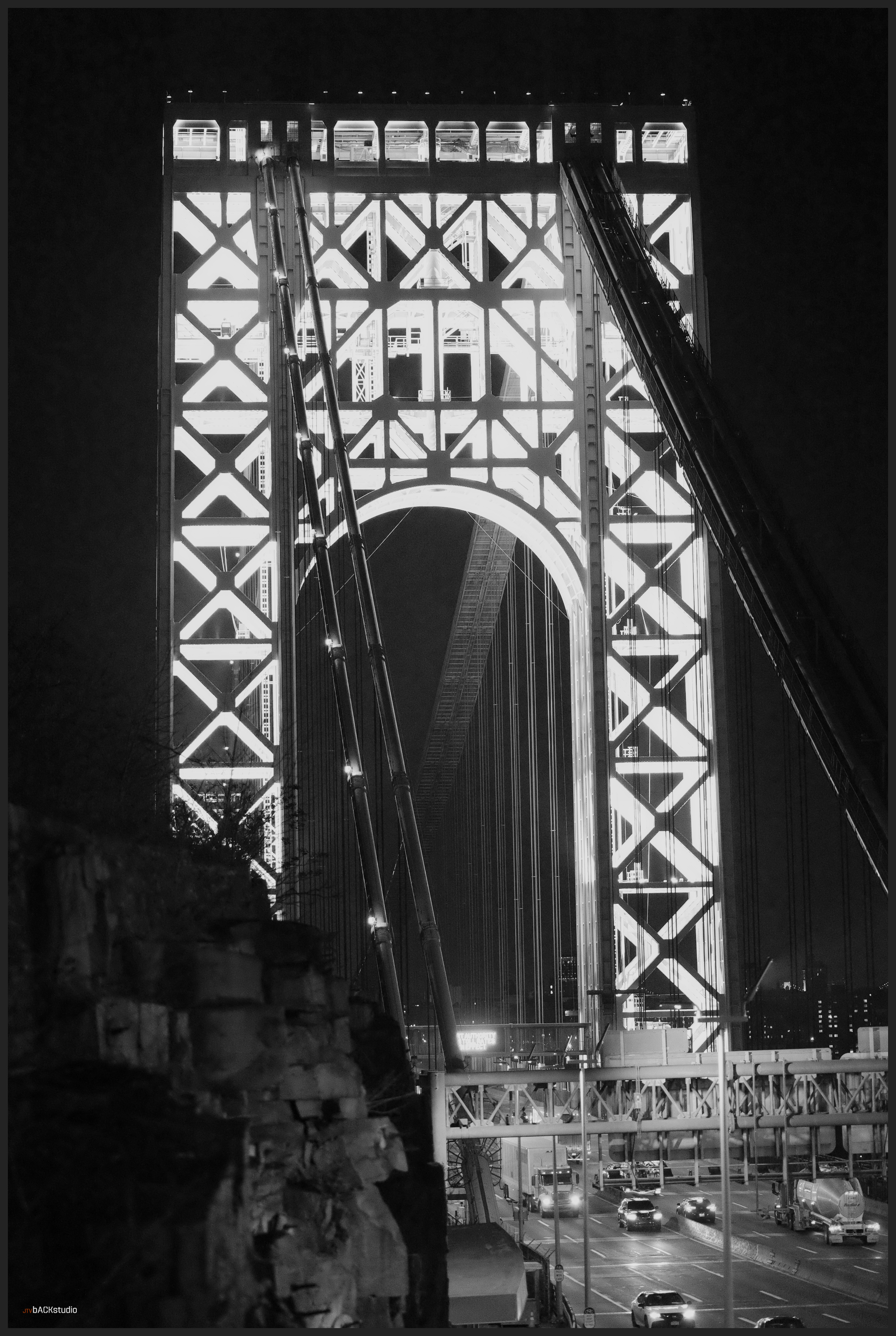
The bridge is named after the General and first President of the US, George Washington (until the current one tries to name it after himself), who led troops from its location through Hackensack, towards Newark, and then South through, Princeton, Trenton and eventually across the Delaware River into Pennsylvania. At least, that’s my recollection from reading about the operations for the year in which the retreat was made in 1776.
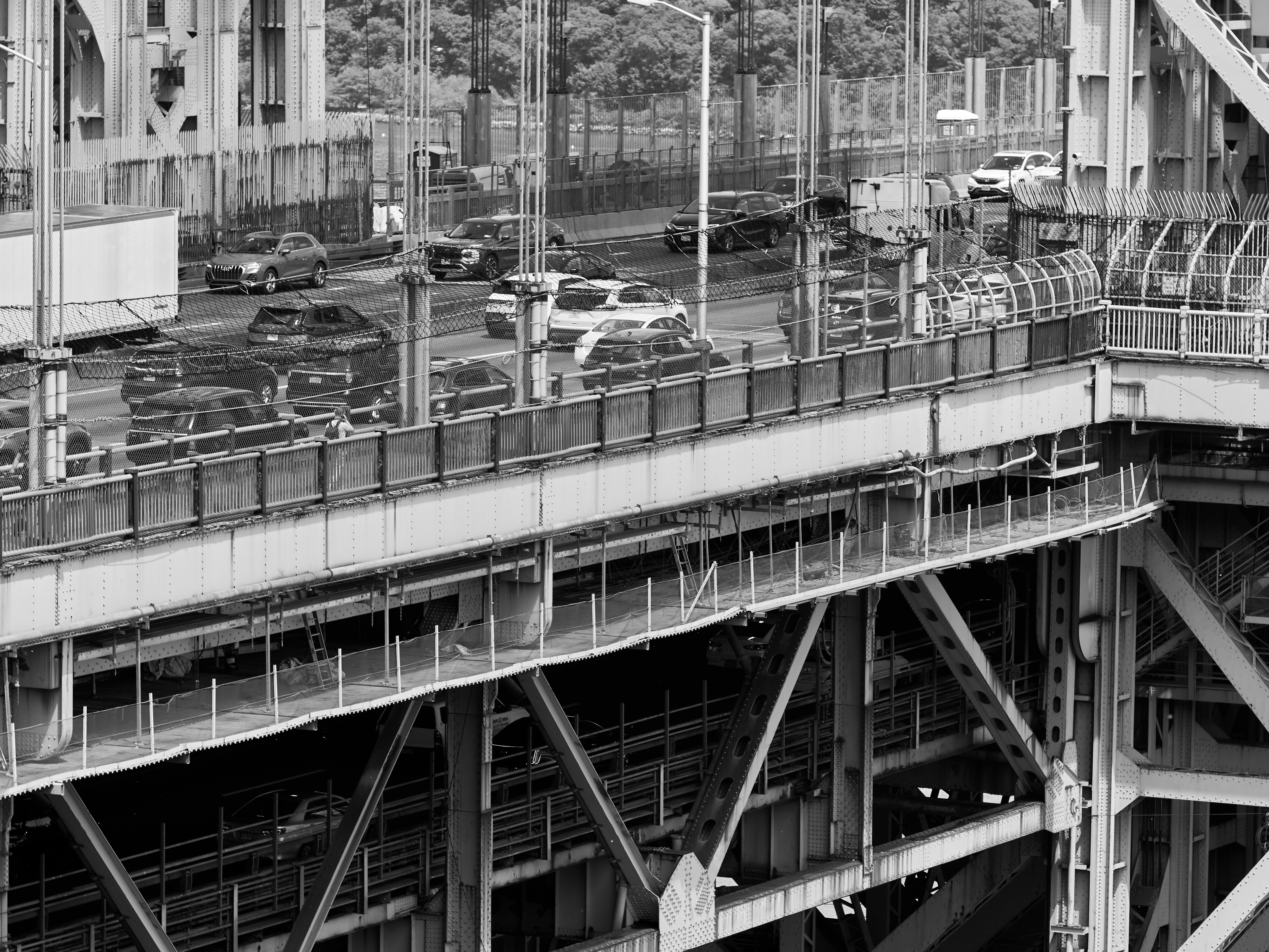
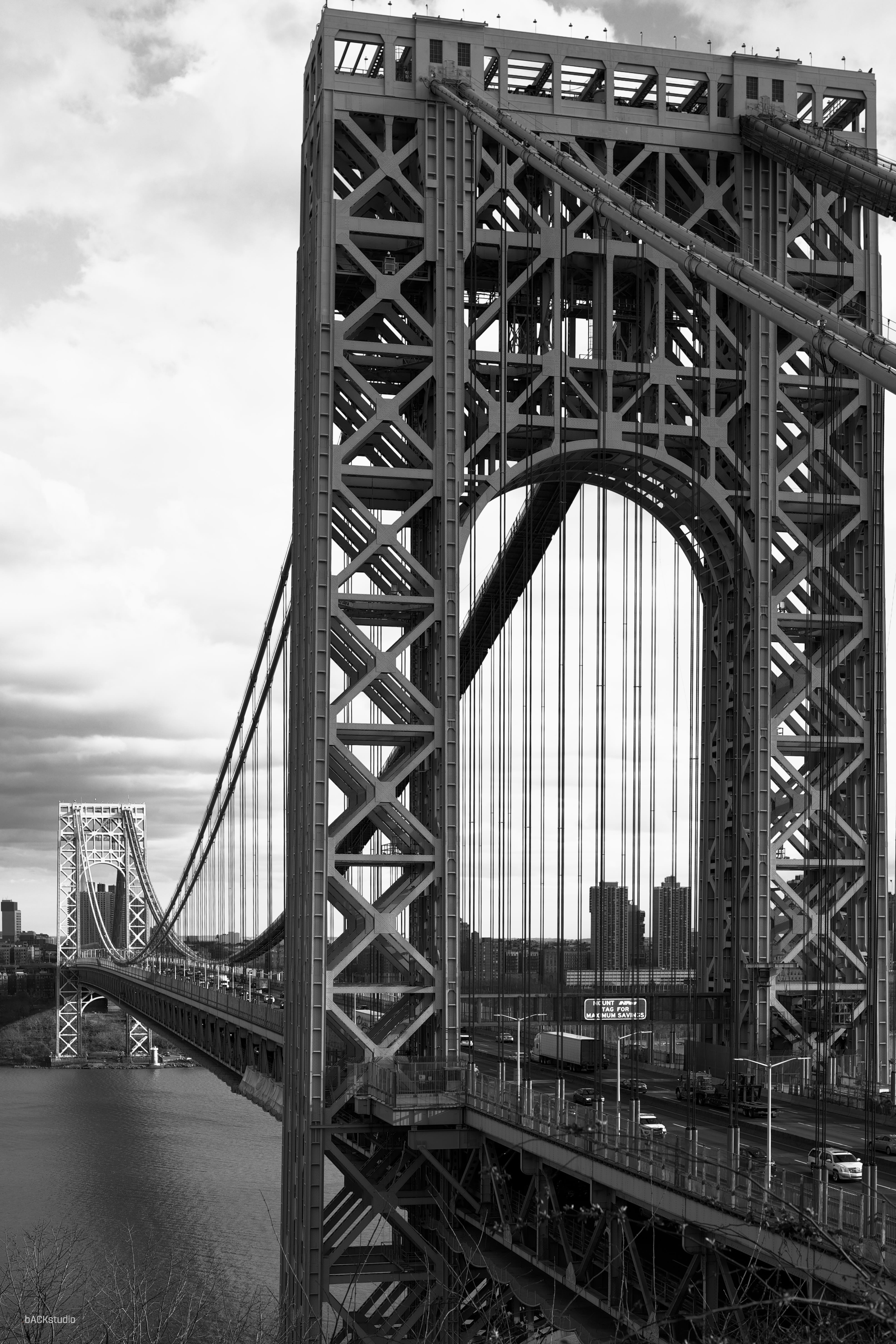
Detail of Bridge under restoration 2021. NJ Tower 2026
The bridge is quite large. At its time of completion, it had a clear span of 3500 feet and was the longest suspension bridge in the world until 6 years later with the completion of the Golden Gate Bridge. The suspension towers are are over 600 feet tall. They are lit during special holidays and occasions. The largest free flying flag in the US is suspended in the arch on the New Jersey tower and flown during Memorial Day, Veteran’s Day, 9-11 and other holidays such as MLK day.
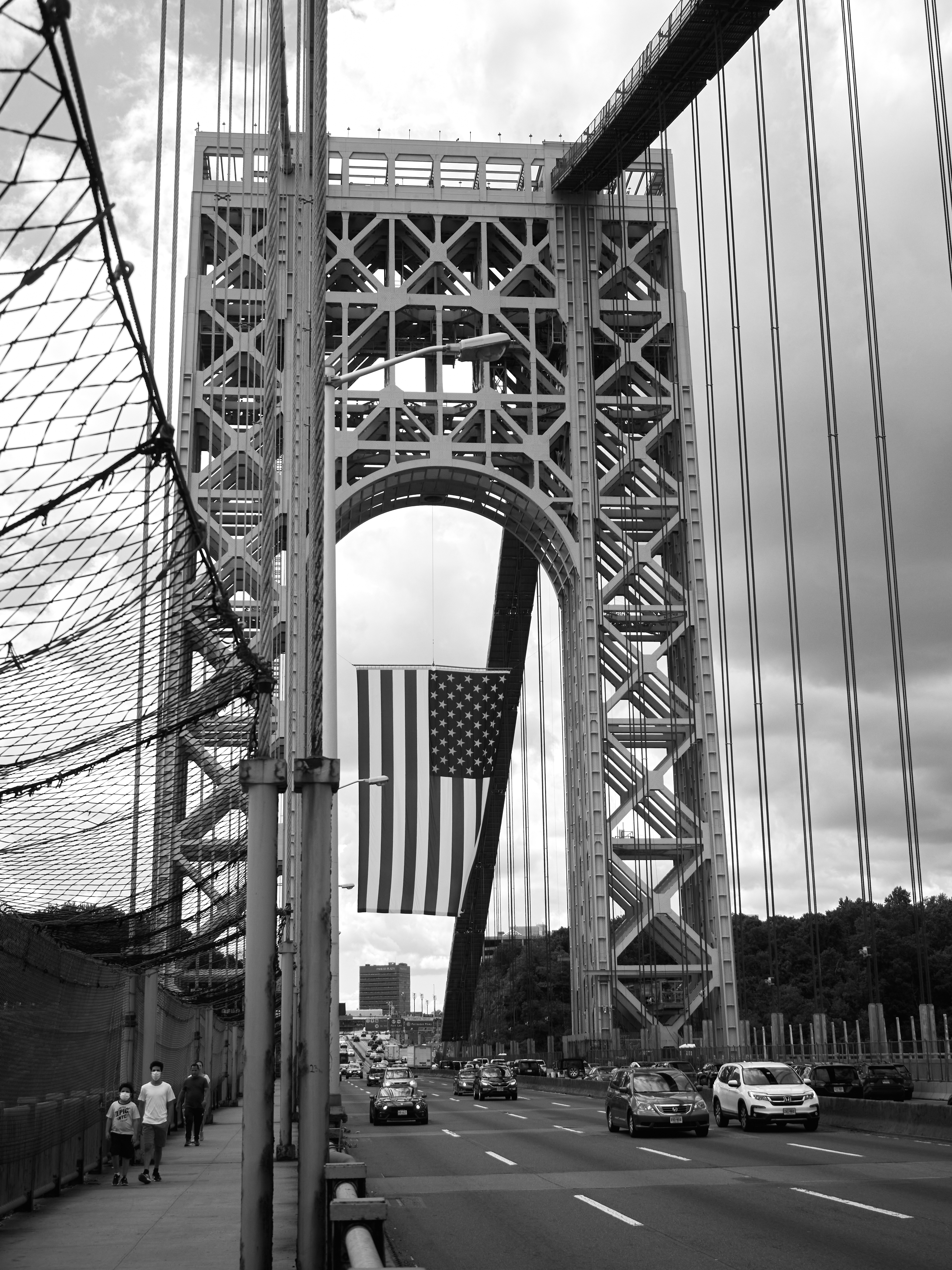
Memorial Day 2022, NJ Tower
At one time, the NJ tower was designed to have elevators and a restaurant grace its top level. The Depression led to that luxury being removed. Instead, an enterprising young man named Ben Marsden opened a club, just to the North of this tower on the Palisades Cliffs and named it “The Riviera.” That club burned down in its original location in 1936 and was resurrected closer to the NJ bridge tower in 1937 (to the right of the NJ tower pictured with the flag above). The club hosted many top performers in its day and was considered a pre-cursor to the Vegas model of entertainment (gambling, drinking, regular entertainers, etc). The land the club sat on was purchased by the Rockerfellers as part of its conservancy to protect the natural formation of the Palisades Cliffs. The Palisades Interstate Park Commission received 700 acres as a donation from John Rockefeller with the idea gestating to create the Palisade Interstate Parkway along the North/South ridge above the Hudson River. When Robert Moses, father of the motor car/freeway systems for NYC became involved in its planning, he designed the Parkway as part of a grand scheme (did he have any other?) to form a scenic a loop from the GWB to the Bear Mountain Bridge that followed partially along the Hudson River.
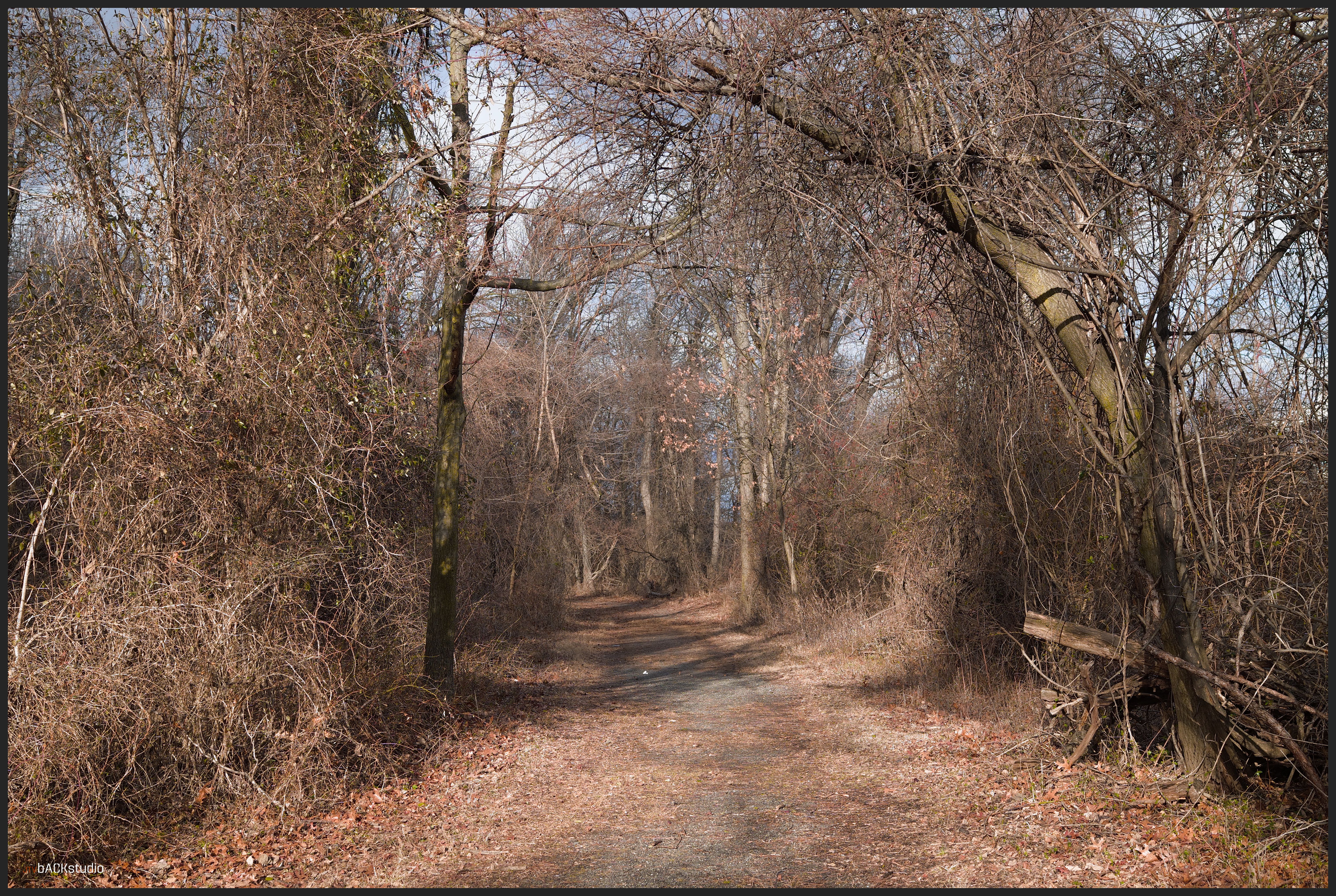
Path from Bridge Access Point to Riviera’s Former Location
Long story short, the Riviera was torn down for construction of the Parkway, the New Jersey tower never received its restaurant, and the bridge tolls have increased to make it a cash cow. Currently it costs about 15 bucks to cross (one way, each time, from NJ to NY) during peak hours and has become as much of a maintenance marvel as it once was a constructed one.
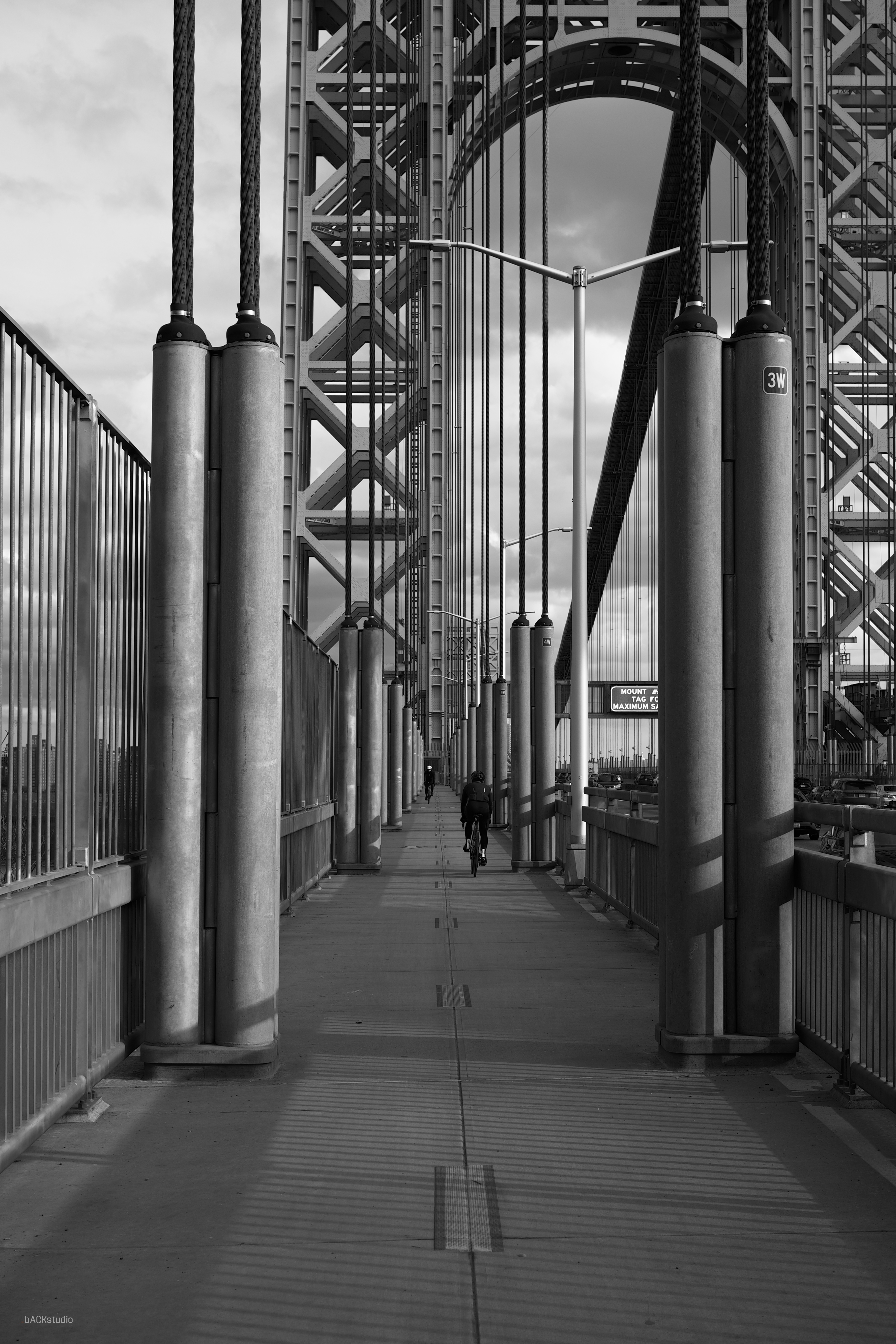
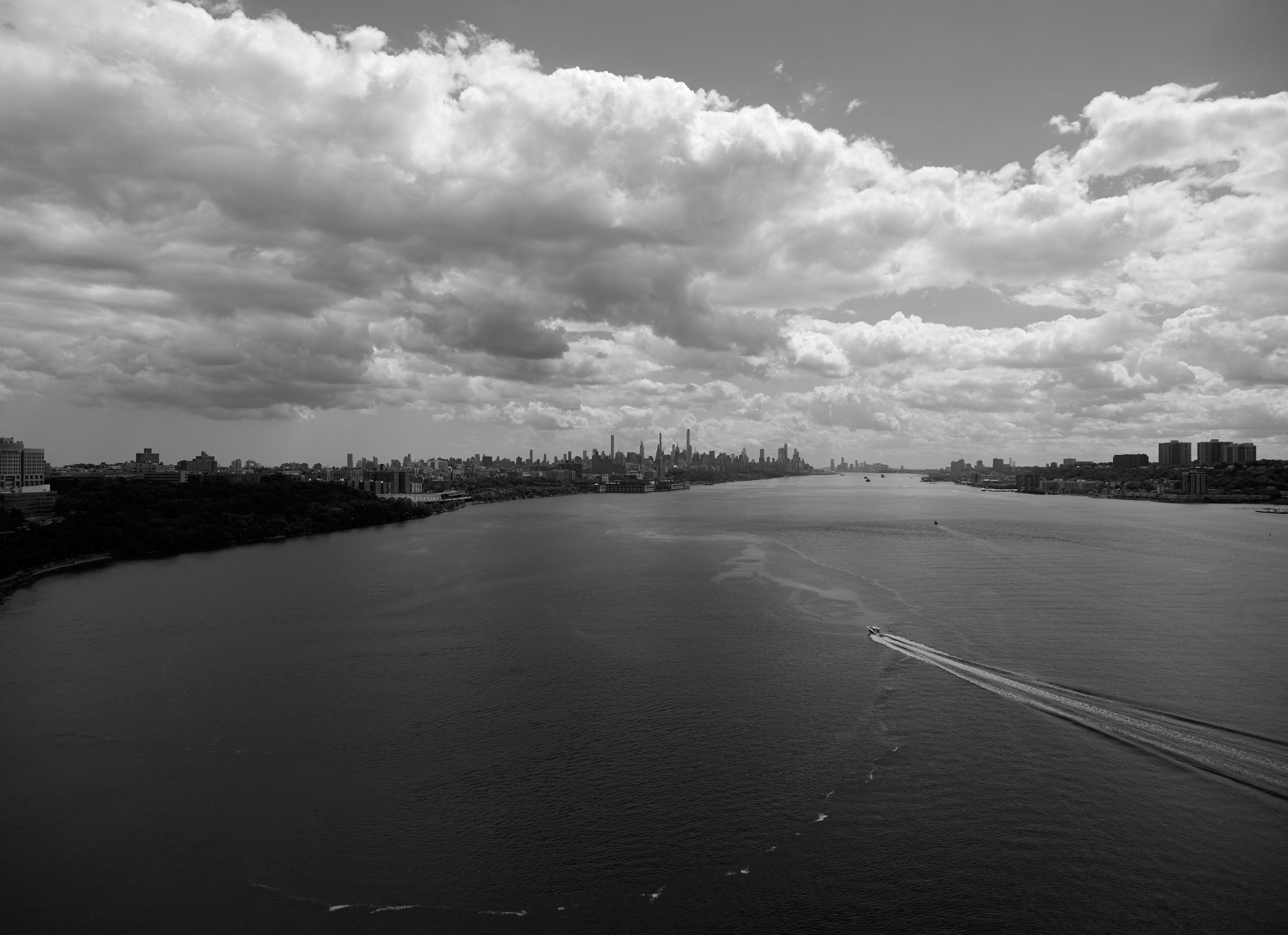
 Amateur in photography. Amateur in life.
Leave a comment