
by James V October 24, 2020
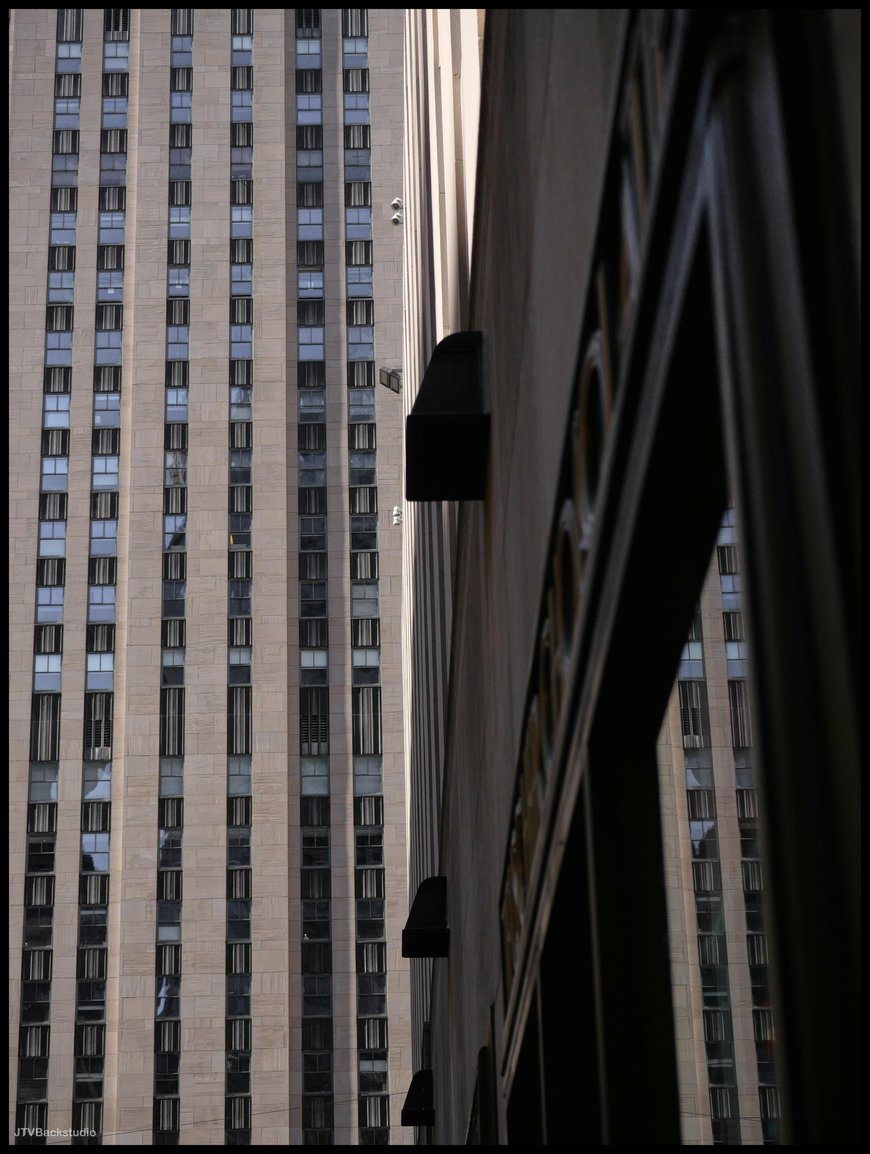
Urban architecture has always fascinated me. From when I was eight years old, I dreamed of designing a high rise. I still do and the ideas for one continuously gestate in my mind. I wanted green terraces in the late 1980’s, floating in the middle of a skyscraper. Actually, that’s a lie. I wanted atriums instead. Back then, everything in my mind was better when built, enclosed and controlled by man. I was a believer that humans wielded the ultimate control on their environment and for this knowledge/privilege, they must create buildings that make themselves known, visually striking, conceptually interesting, culturally and architecturally self-referential …stoically modern.
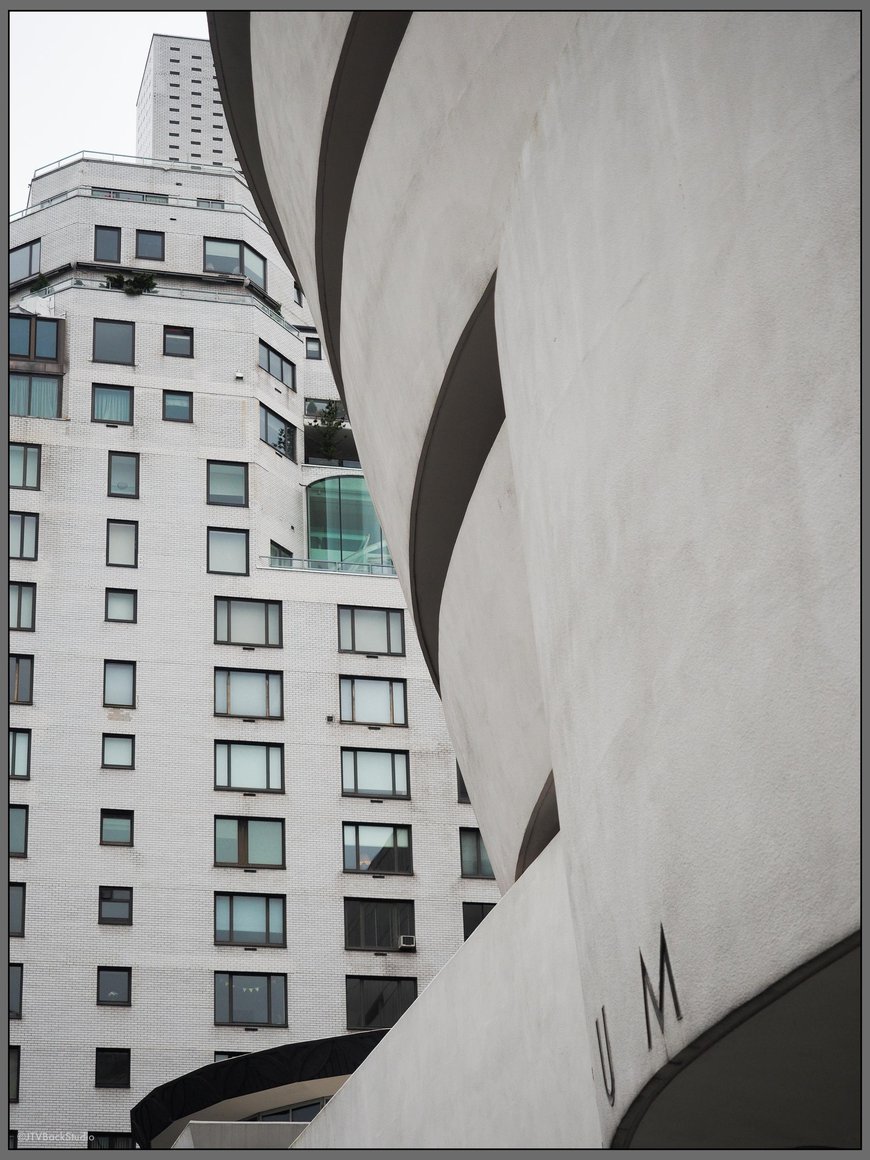
Guggenheim Museum, NYC
I don’t recall when exactly, but at some point in my life, I came to the conclusion that hard surfaces and green leaves weren’t the only way to make a garden. My travels to Europe allowed me to explore older architectural buildings and architectural ruins, which left a lasting impression. I came to appreciate the decay of old buildings. They seemed to patina into a new found beauty. Did I want, like Le Corbusier, to create a new design ideology? An ideology based on a system of proportion and re-interpretation of the classical that eventually eschews tenants of classical dogma to liberate the designer? An ideology that embraces modern technologies and building programs? Sure, what the hell.
For years, a building had to look as if it was bearing the weight of time and resisting or yielding to it gracefully. A building had to appear permanent. Its character or essence had to remain by delivering something of architectural value even after it started to crumble.
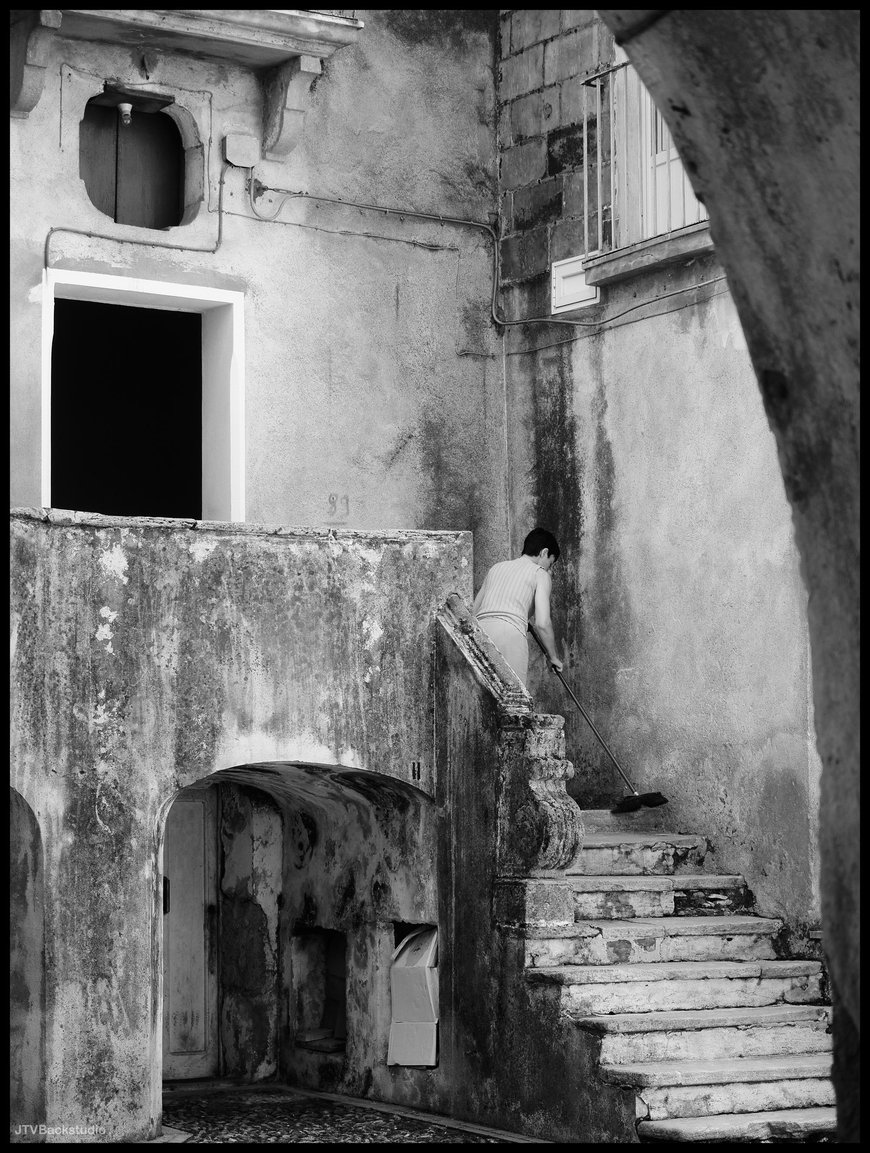
Calabria, Italy
At their very basic interpretation, buildings are habitable experiments and constructions of geometry. In the 20th century, colossal modern architectural figures like Gaudí, Mies Van der Rohe, Le Corbusier, Bunshaft, Gilbert, Tange, Yamasaki, Pei, Rudolph, Eisenman, Graves, van Berkel, Koolhaas, and Frank Gehry (to name a few) manipulated, explored and challenged the concepts of architecture and its relation to geometry; they designed the concept(s) of space. As much as they wanted to free themselves of program or prioritize constraints or re-evaluate relationships between architectural practice and theory, or find inspiration between the design and building process, explore the origin and structures shared between the architectural and human language, elaborate architecturally modern ornament and detailing, (the list goes on and on)…buildings remained and will always be, physical constructs of an idea. How a building may age, well that is always left to the considerations of “maintenance.”
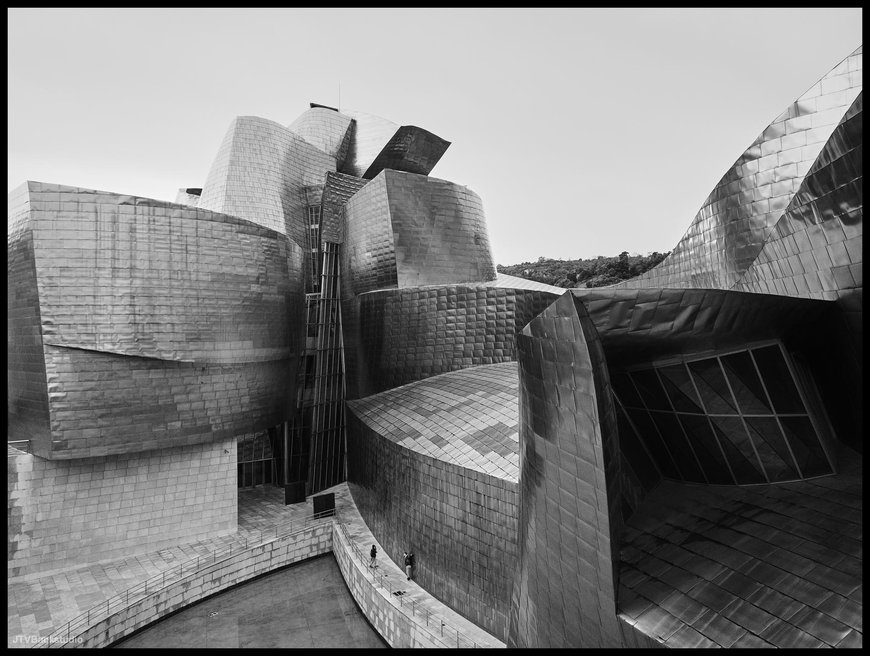
Guggenheim Museum, Bilbao
I feel that modern buildings are envisioned looking new for eternity. In today’s modern world, buildings from antiquity are expected to look old. Did builders from antiquity expect this? Of course not, the Romans and Greeks built with immense precision and dressed the fine stone of their buildings with an investment in time commensurate with their expectations of longevity. Society doesn’t invest in large scale construction without being convinced of its timeless and durable visual appeal. Like us, our ancestors thought their buildings would remain looking new for eternity. After all, they were the “modernists” of their day. Is it realistic for our modern culture to expect the same from our new architecture?
Mies van der Rohe was one of the first architects to conceptualize an all glass skyscraper. It made quite a splash when first introduced in 1922. The building took on an almost ethereal quality. Its curves and carefully considered massing made certain elements of the building look visually slender and light. This appearance of weightlessness made it feel less permanent.
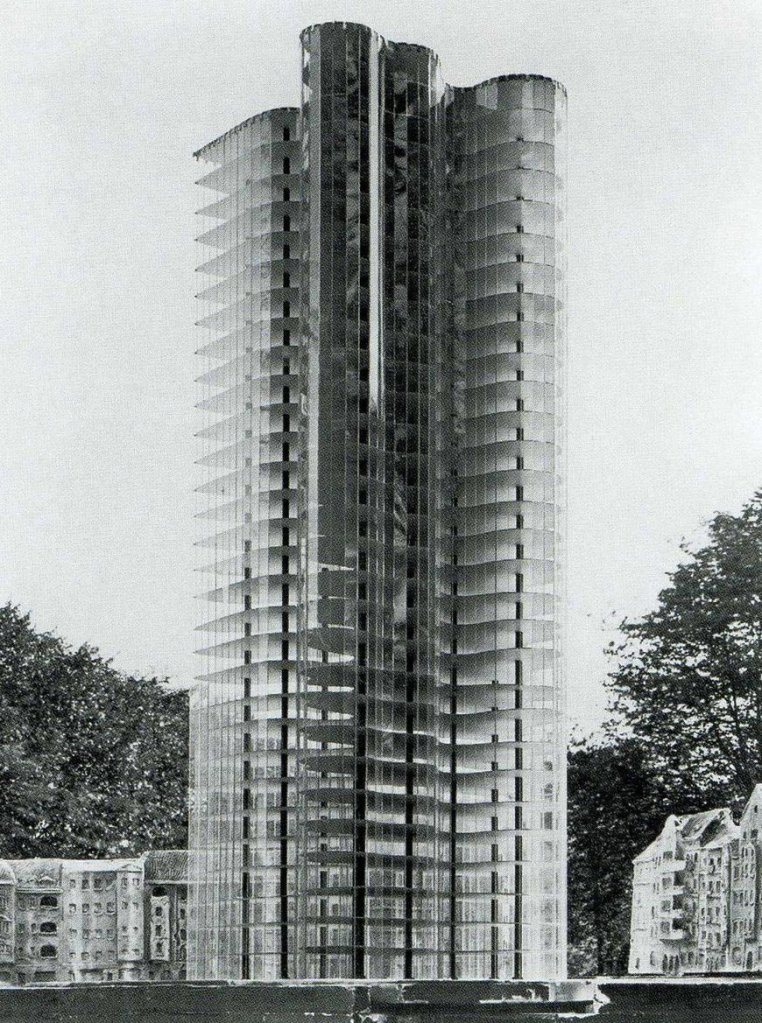
WikiArquitectura Image, Mies’ Glass Tower
Digression: In 1851 the first all glass building, on a large scale, was erected for the World’s Fair in London, England. It was known as “Crystal Palace.” After the World’s Fair, this “temporary” building was deconstructed and erected on a new, permanent site in Kent, England. It was built from the same elements as the London building but in a new design. Its cost was more than 8 times the original and the company that purchased the building and paid for its reconstruction went bankrupt. The Palace fell into disrepair, and the subsequent ruin was purchased and restored to its former glory by an English investor. On November 30, 1936, it burned to the ground. The “Crystal Palace” was perhaps one of the most popular architectural examples of an all-clad glass building in the world. Its historical dismantling, reconstruction and eventual surrender to fire, may have tainted the conception of glass as a “permanent” building material.
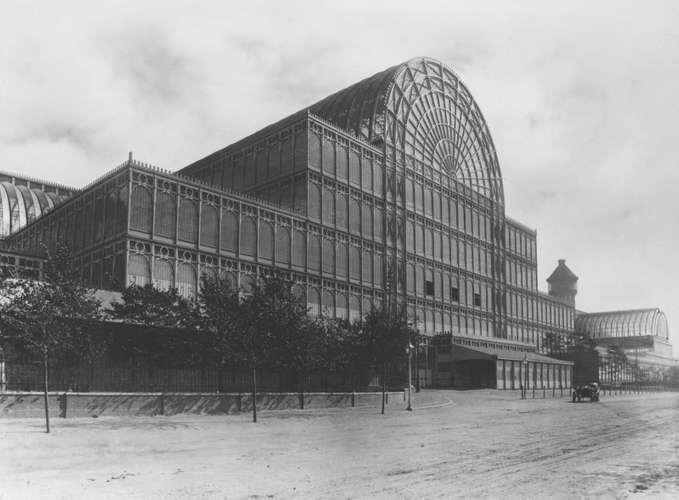
Britannica Image, Crystal Palace
Modern skyscrapers and buildings are not built like those of antiquity. Old buildings built of solid stone walls with veneers of a finished or “dressed” stone were heavy, their heights limited by the weight of the material itself. As frame construction began to replace solid masonry bearing wall or arch construction, the outside masonry was changed from solid full bed stone laid onto a masonry substrate, to a cladding. Eventually, the stone-clad towers were supplanted by buildings enclosed by a “skin” which is lighter and more flexible than old solid masonry or stone clad buildings. The skin expands and contracts with temperature changes (up to several cm) and also accommodates building movement in wind. The John Hancock tower, in Boston, MA, was an example of an all glass tower. Unfortunately, before it was finished, the glass panels began to pop out of their curtain wall frames, sending shattered glass to the plaza below. This wasn’t exactly a good development for the faith placed in curtain wall clad buildings. This wasn’t exactly a good development for anybody.
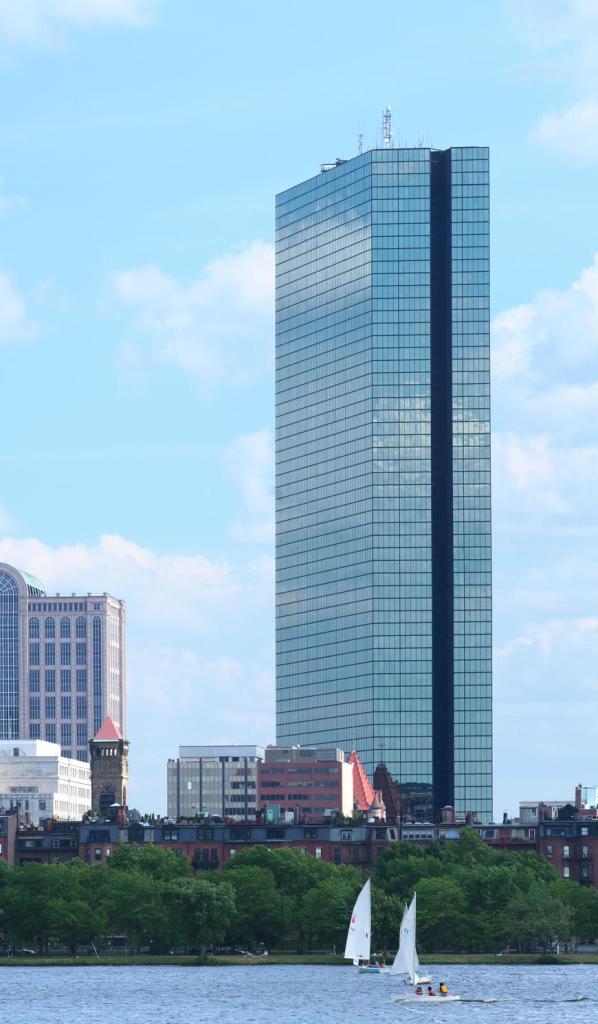
Wikipedia Image, Hancock Tower
In the 1950s an architect named Gordon Bunshaft designed the Lever House on Park Avenue in New York City. This office tower was designed completely in glass curtain wall and one of the first of its kind in the New York City. Inspiration for this tower first stemmed from Walter Gropius’ Bauhaus movement/school. The last Director of the Bauhaus, before fleeing Germany to the United States, was Mies van der Rohe and it is evident that the skyscrapers eventually realized by Mies and those designed by Bunshaft took on similar aesthetic qualities. But Bunshaft also designed an asymmetrical composition of the different building elements in the design, perhaps inspired by Constructivists and Le Corbusier. The Lever House tower-with its visual appearance of being separated and floating asymmetrically above an unintuitive looking and raised horizontal base – completely reinterpreted the design of a traditional skyscraper. The base extends the full width of the site and also appears to “float” above the sidewalk on thin columns. Elevating the base (an unintuitive gesture) allows the pedestrian access into a courtyard at sidewalk level. The raised base is actually a donut in plan, and one is able to look up through the floor above to see the tower from a different perspective. The design creates a playful juxtaposition between base and tower, and leaves the composition feeling confident if not a bit less stoic than its competing stone-clad towered brethren. Bunshaft detailed the facade (as best could be achieved in 1950) to perceive the thickness (or thinness) of the skin, making it look as if it was pulled tautly around the perimeter. The use of a glass facade for the entire building was a revelation. It was the Mies concept of the glass tower finally realized with the technology available at the time. And it was, by all measure, a design success and a maintenance headache.
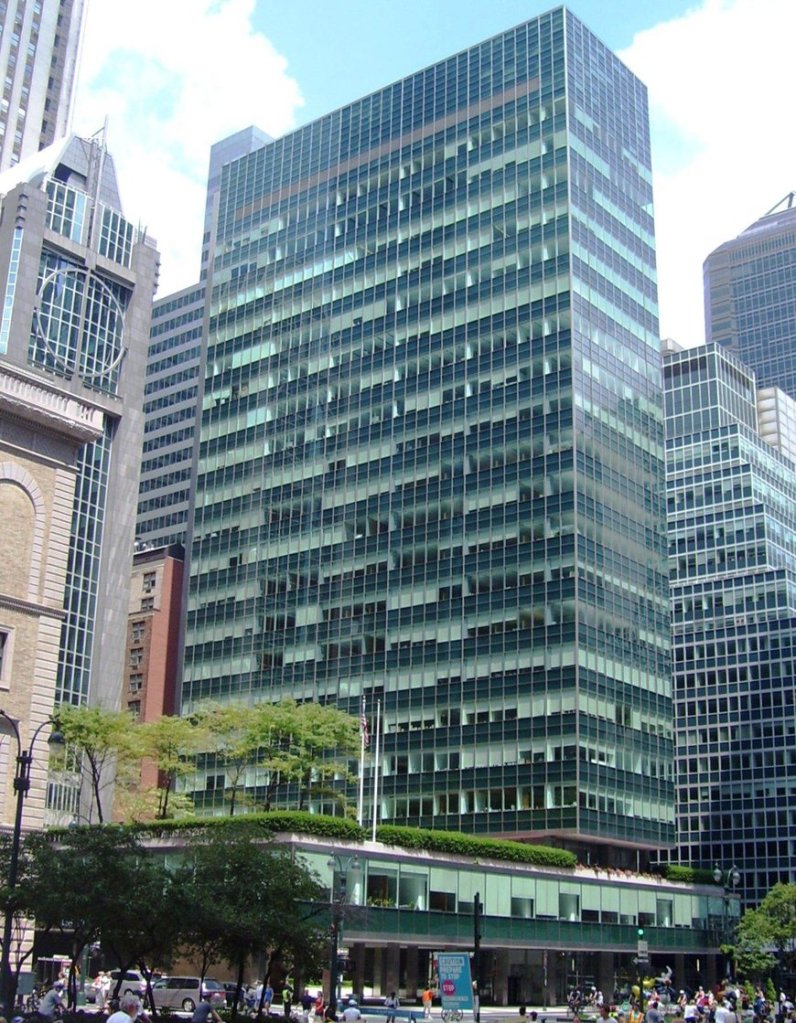
Wikipedia Image, Lever House
Not to sound like Rachel Dratch as “Debbie Downer,” but The Lever House fell into severe disrepair within 35-40 years of its completion and required a total restoration by 1998. Once again, we see a modern work of architecture requiring maintenance and restoration less than a half-century after its existence. Why these experiences with the newest of modern buildings?
Modern Architecture by its very definition challenges the limits of technology. It can be argued that, inevitably, modern buildings come with a risk to durability or long term care. For many years, (decades) NYC was a very conservative architectural collection of granite clad buildings “withstanding the test of time.” Since 1990 this has begun to change dramatically. “Starchitects” (famous architects with visually notable design styles) have been designing unique and thoughtful buildings (not all, let’s be fair) throughout the city. New York City has once again, become identified by its unique architecture, as it once was when neoclassical and gothic reinterpretations of the skyscraper dominated the skyline. Gotham’s mass and density has been replaced by newer exceptional feats of design and engineering prowess. What happens when these begin to show signs of aging? Do we have the same expectations as previous generations that the legacy of architecture left by this generation will age as gracefully as those of antiquity? Did designers concern themselves with such things or were architectural historians best left to grapple with time’s hand in the aging of a building’s construction as well as design?
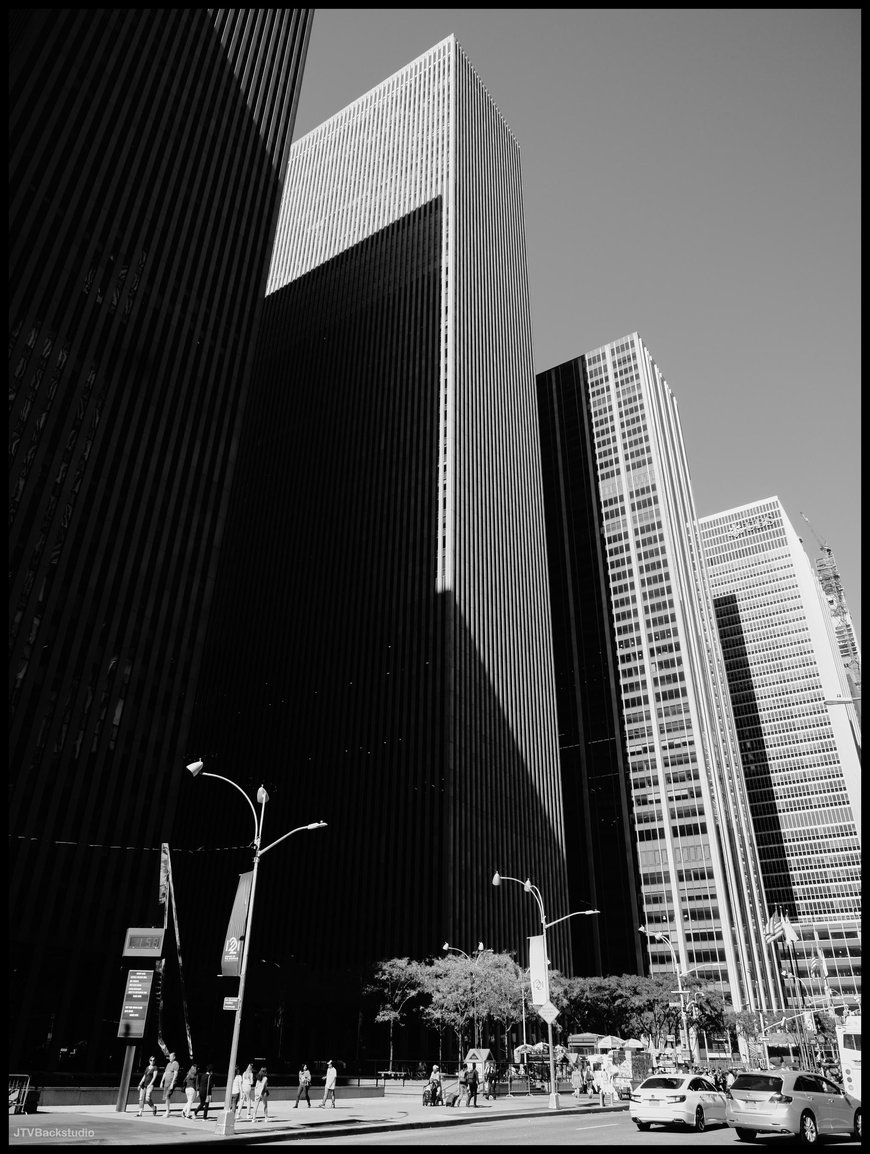
6th Avenue, NYC
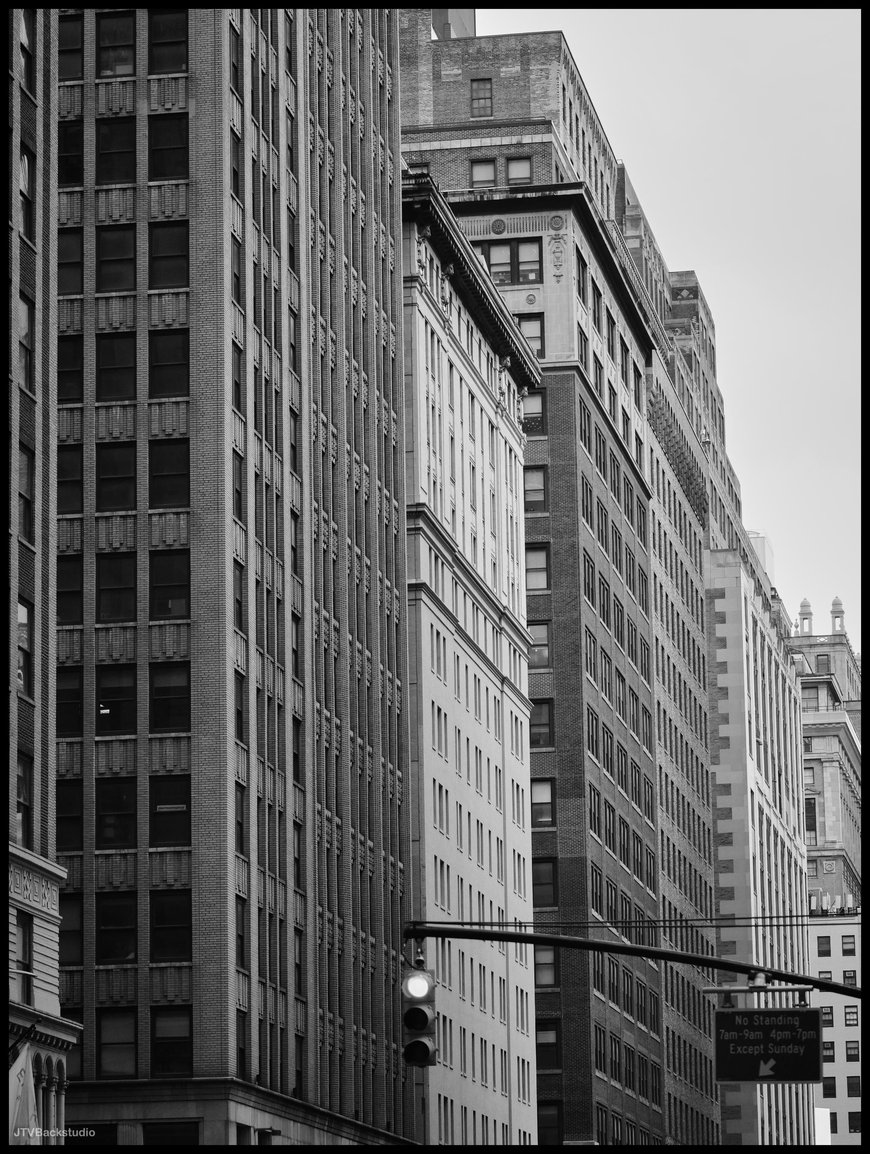
5th Avenue, NYC
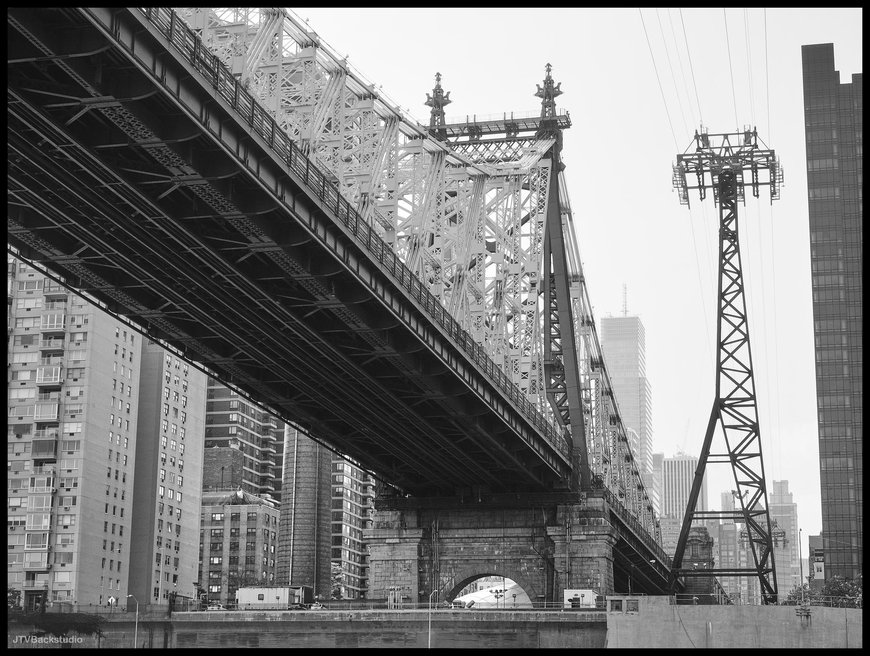
Queensboro Bridge and Tramway Tower, NYC
There are many modern examples of architectural masterpieces. By no means is this blurb an indictment of modern architecture. Its focus, instead, is to help me determine why I choose to photograph buildings the way I do. What am I exploring in these photographs? I see architectural change as already noted. I see a certain vulnerability with some buildings and assurance with others. I see buildings sitting comfortably or awkwardly amongst their surroundings while those same buildings sit awkwardly or comfortably among their peers. I see buildings inadvertently evoking feelings of alienation and those that invite us to explore them. I see buildings that act as giant marketing devices in our era of commoditization and those that do everything to obscure our perceptions of what lies within. I see buildings as manifestations of an Owner’s ego and others that appear as realizations of an Architect’s ideology. I see buildings that make unique and thoughtful use of materials and others that answer their appearance with expedient efficiency. I see buildings destined to become landmarks and others that look as if they have chased the latest fad. But in NYC, what I have seen developed the most are buildings as pantheons built for the wealthy or those that aspire to this wealth. These buildings are not concerned with aging, they are expected to look forever young in their Owner’s or Architect’s eyes. Architects have become the plastic surgeons of the cityscape.
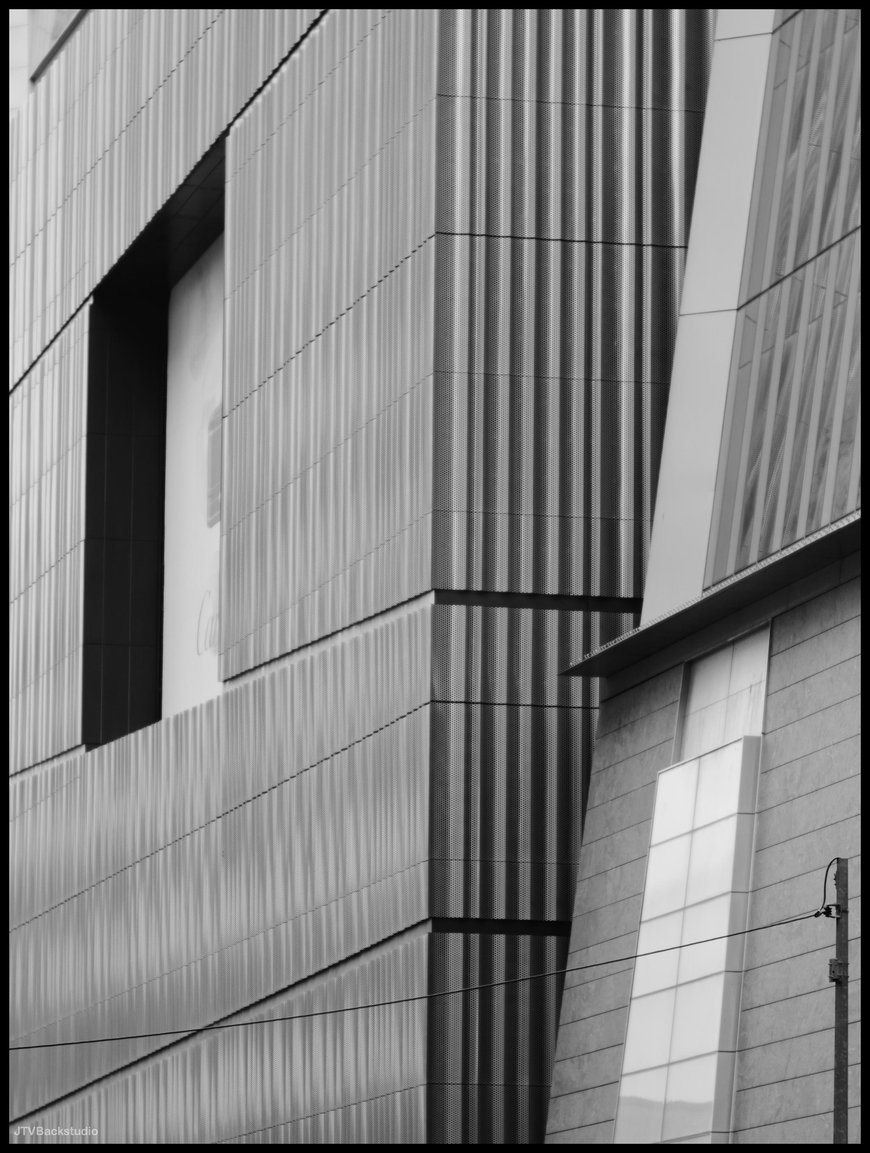
Untitled, NYC

Untitled, NYC
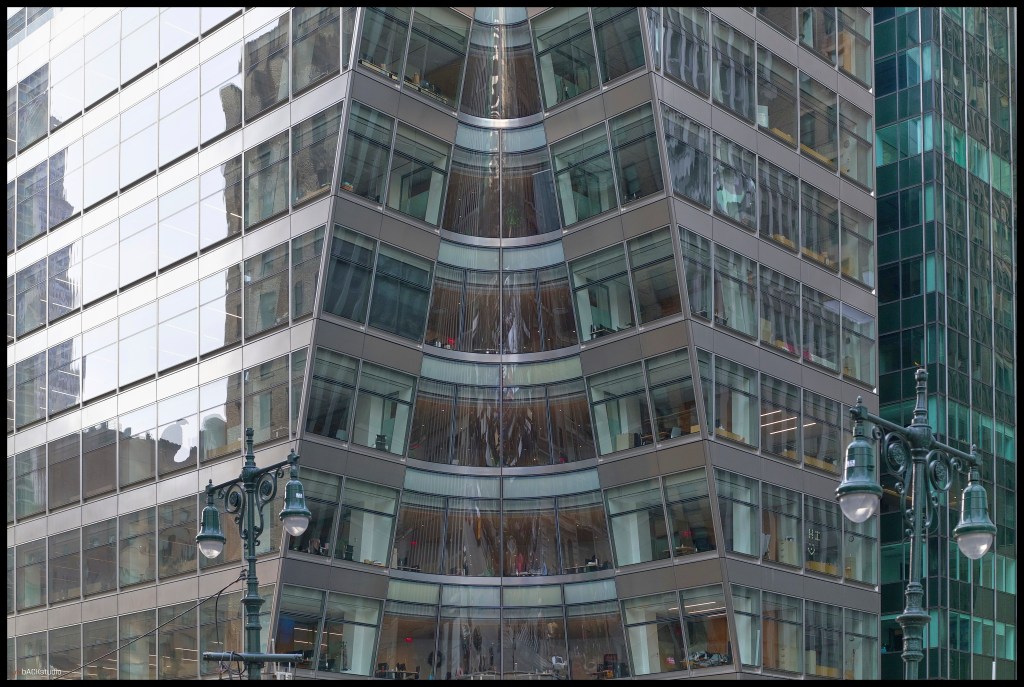
I believe as modern buildings supplant older ones, the reflective glass and shiny metal towers of the city become “background” architecture. Each tower dulling the previous new jewel of the city until, with repetition, our senses become somewhat muted and the memories of the towers take on more permanence than the appearance of the structures themselves. A new architectural legacy is born.
The visual excitement of glass and clad buildings is blunted by quantity.
The visual permanence of stone is enhanced by quantity.
Quite the conundrum, don’t you think?
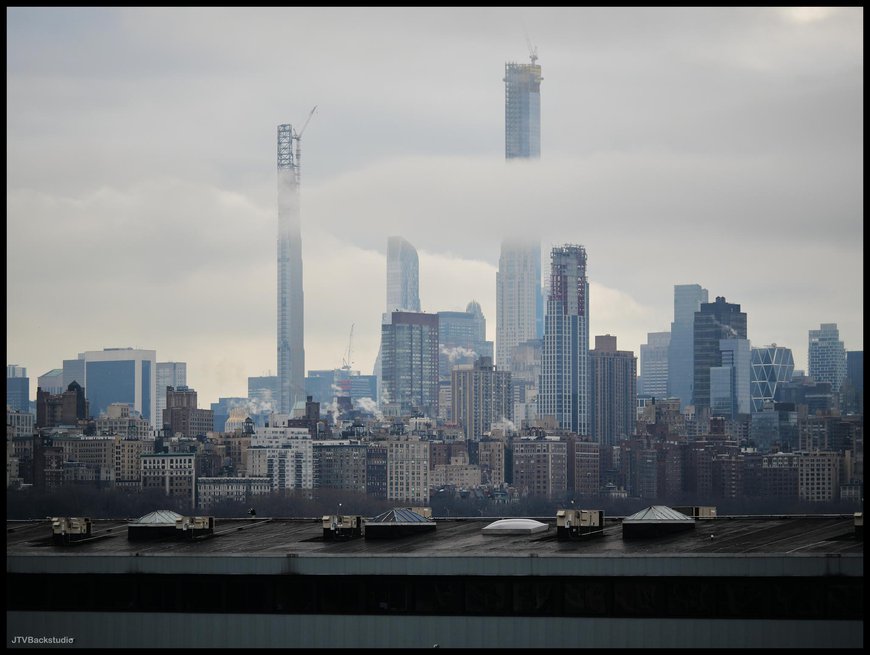
View of Nordstrom Tower and the “Needle,” Under Construction
Thin skinned buildings imply an “interchangeability” of the outside materials. A structural frame can be clad with any of the numerous materials available to the architect: GFRC, Curtain Wall/Glass, Metal Panels, Resins, Porcelain, Thin Stone, Thin Masonry…to name a few. The concept of imagining a plethora of cladding options to the architect when designing the building will leave the observer to wonder why a certain material was chosen for its particular implementation on the facade. This breaks boundaries of material typology. No longer does stone have to be considered a heavy aesthetic. (Mies broke that boundary with the Barcelona Pavilion, a small scale design in 1929 which cleverly uses design details and a minimalistic composition to perceptually dematerialize marble-clad stone walls when traversing through the structure) Metal panels can have different shapes, colors, opacity (through punctures/openings/patterning), thickness and reflectivity. Glass can be reflective, clear, colored and have different opacities, shapes, thicknesses…we get the idea. These materials can be almost anything and it’s their inherent properties that limit their application to a design. But for many intents and purposes, the materials in a clad building are interchangeable. The program/layout and aesthetic are the two main factors in determining their application…not the notion of permanence.
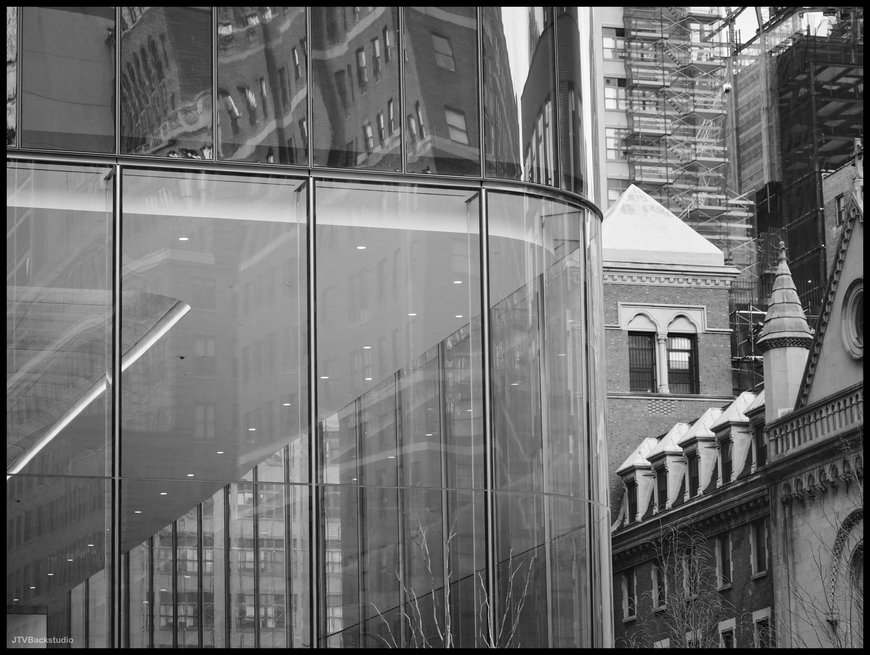
Untitled, NYC
As photographers, we begin to search for juxtapositions or small vignettes of intentional or unintentional interest and beauty. Serendipitous, sometimes intimate occurrences of light, shadow, reflectivity, pattern, straightened edges or sculptural fluidity are captured by photographers that were inconceivable by the architect in years past. In our present world, the advent of computer modeling and photorealism has allowed the architect to create his own idealized capture of the building. But it is the rich interplay of structures and buildings within their context that provides the interest for the photographer. We are able to control the moment in which we freeze time, and therefore, suspend the architect’s intention…if only for a brief fraction of a second.
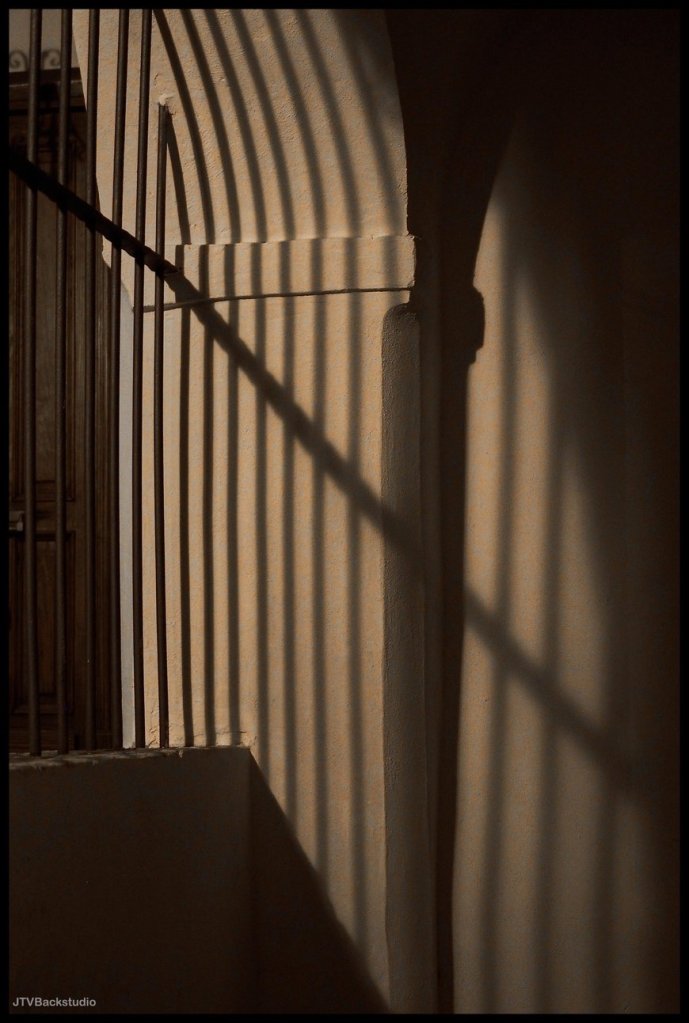
Calabria, Italy
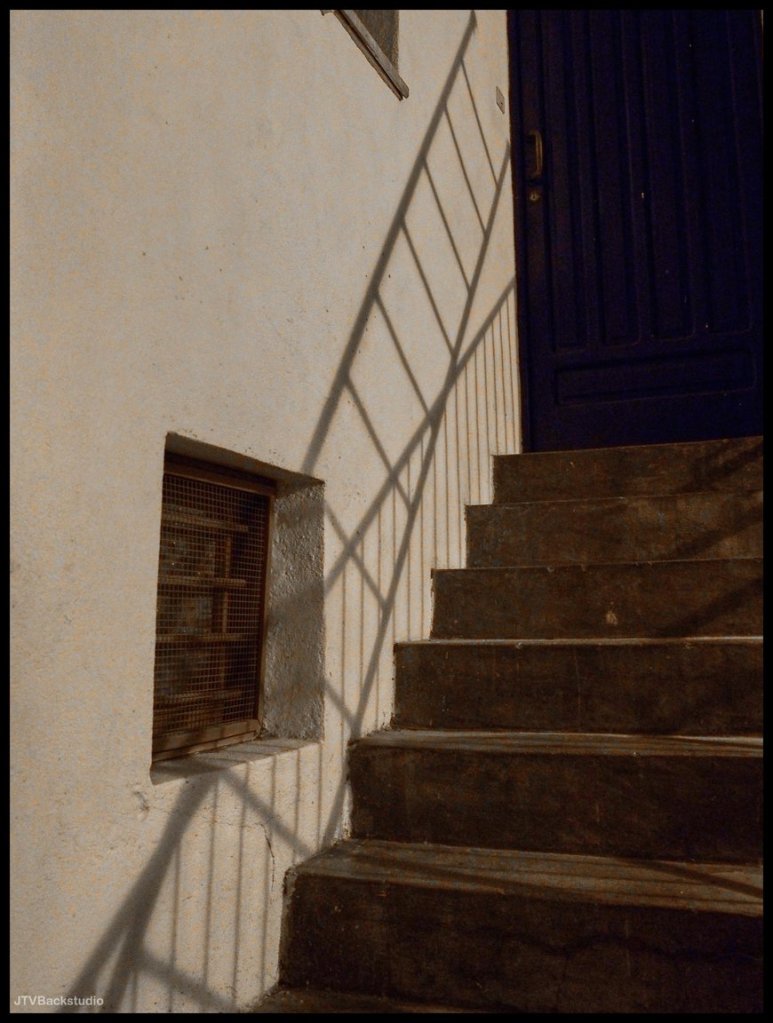
Calabria, Italy
 Amateur in photography. Amateur in life.
Leave a comment