
Edited 12/8/2025 and 12/10/2025
I recently made what seems to be, an impetuous decision: I purchased a Sigma Bf camera. As a hobbyist photographer, rest assured that on behalf of all of us, I admit to an assumed collective shortcoming of having fallen victim to “gear acquisition syndrome.” Cliche confirmed. In the process of this impetuous decision, I abandoned an entire camera system and part of its philosophy. Or so I thought. As a reference, I was a micro 4/3 user for more than 13 years (Olympus EM5, Olympus EP1, Panasonic GX9). Always a “late adopter” my first micro 4/3 camera was purchased 4 years after the invention of the system. Previous to the m4/3 system, I was shooting a Nikon D-80 APS-C camera with CCD sensor. (As if the sensor makes the difference for my photography and pictures). And finally, I still own a Nikon Coolpix A which I purchased, if memory serves me correctly, 5 years after its introduction. Maybe less, as it was a Nikon refurb unit that still, to this day, makes great images, even if it looks like a toy.
Fact: Pride of ownership will almost always mean something to the hobbyist or enthusiast.
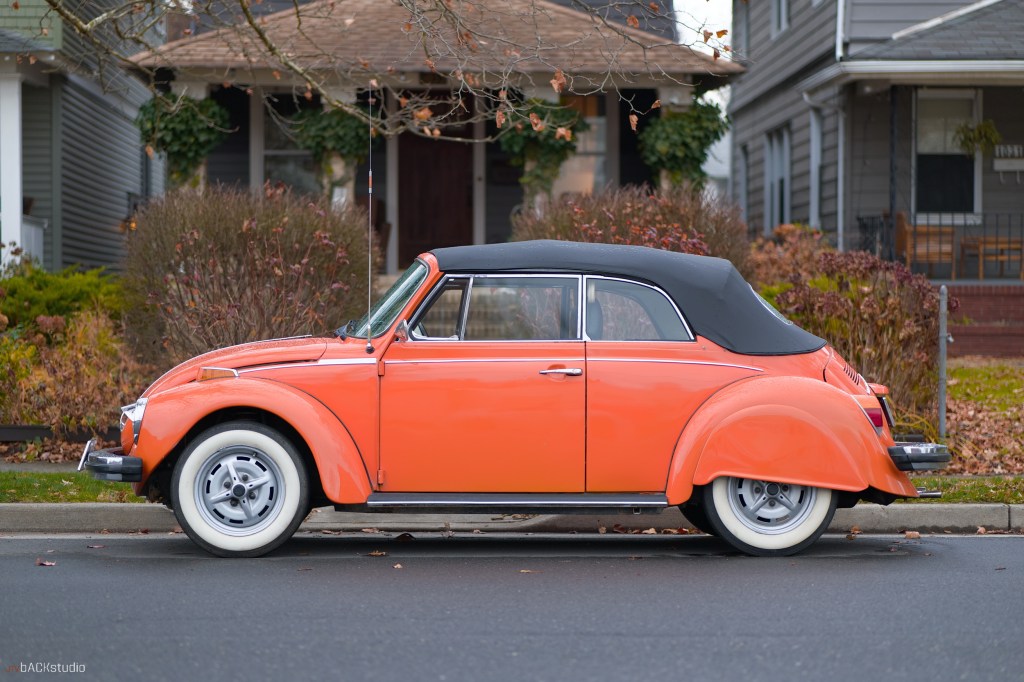
Sigma Bf, Lumix S 85mm 1.8 – JPEG SOC
Something about the Sigma Bf appealed to me (referenced as the “Bf” for the rest of this garbled post). As an architect (a little more history), aesthetic simplicity or the appearance thereof, pulls at my heartstrings and appeals to my sensibilities. But the Minimalist aesthetic wasn’t the primary reason for a change, rather, it was the motivator. The larger full frame sensor was another contributing factor. More specifically, the challenge of creating an appearance of infinite focal plane layering can be difficult to achieve in micro 4/3 systems. Such an effect doesn’t necessarily require larger sensors and greater depth of field, but rather, a certain sharpness to the lens and how it works with the sensor to create color shading and grading with the depth of the image, etc.. I’m still out to lunch on this one…more to come in the future perhaps about this theory. My thesis, as of now, is that this phenomenon is mostly lens related. Therefore, I’ve just caught myself in my first excuse for purchasing this camera. To better make an argument for sanity, the 24mp sensors of today (and even those almost a decade old) have less noise at higher ISO settings than the older small format sensors and offer more flexibility in dynamic range. Ask me if this matters when I shoot and the answer is most likely a whopping “no.” Second excuse.

Sigma Bf, Lumix S 85mm 1.8. – JPEG with custom tweaks. JPEGs deliver excellent color rendition (“Standard” setting) if not slightly noisy on the “Rich” preset setting.
JPEG files. I never used them often when shooting Micro 4/3. I wanted to extract as much information and flexibility from the sensor as possible. Frankly, the results were very good. In the case of the Bf, JPEGs contain enough dynamic range to adjust highlights and settings without introducing strange color shifts or excessive noise at reasonably low iso levels. The noise in the original image remains consistent when editing JPEG files (within reason). While not as workable as the native DNG files, they are more than adequate for snaps and hobbyists trying to reduce file sizes and make quick images with small amounts of “tweaking.” The photos above and below were slightly adjusted to lower the sky highlights, making clouds more distinguishable, while the midrange RGB color levels were adjusted to keep the general lighting of the scene consistent.

Sigma Bf, Lumix S 85mm 1.8.
Then, there is the lens system to consider. After all, how many camera options do you have if you commit to one lens mount system? With most full frame systems: Sony, Nikon, Canon, etc…you have only the choice of cameras which are made by the respective lens mount designer/creator. This means, buy into a Nikon Z system, and your camera will be a Nikon only (usually). Lens adapters can avoid this scenario, but that requires sacrifices in performance (sometimes), size (the adapters add to the mounting depth of lenses) and more accessories to carry around. So they can be fun, but not, in my opinion, the best solution. I prefer an option to buy a different camera body for the lenses I invest in. It is why the Micro 4/3 system was appealing…even though I sold it off. Excuse number three. But to be more serious for a brief moment: Leica, Panasonic and Sigma offer differently styled bodies and philosophies for the photographer adopting the L mount system. Cameras that fulfill such styles and descriptions as: rangefinder, DSLR style, video-centric, photo-centric, simple, expensive, solid, small, light, large, durable, etc…
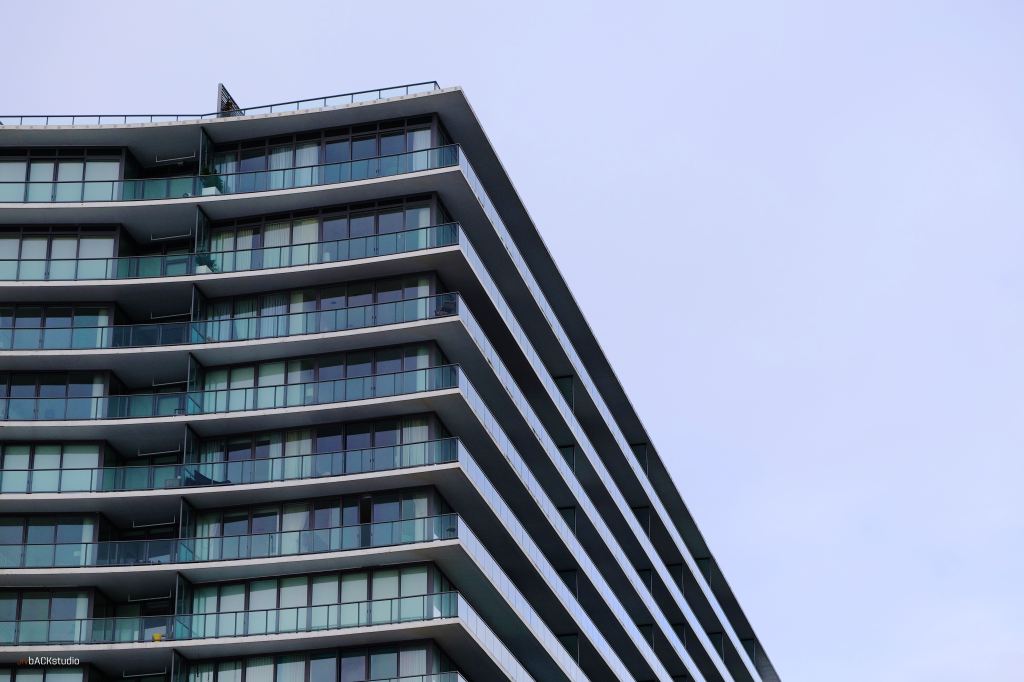
Sigma Bf, Lumix S 85mm 1.8 – JPEG tweaked to accentuate highlights in balcony rails (with little sacrifice of detail) and contrast added to reinforce appearance of the sky bleed into railing geometry.
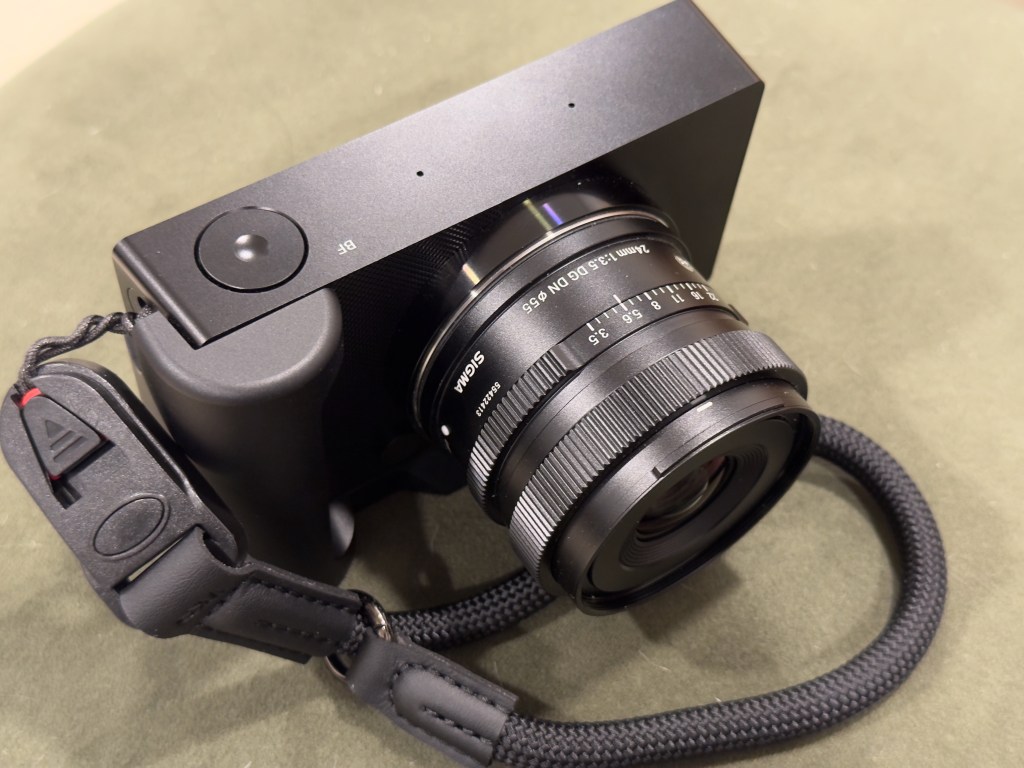
Sigma Bf Camera top view. Microphone holes seen from top for video (what’s video?). Quick release VKO Wrist Strap. JJC black metal grip screwed into tripod screw on bottom of camera.
The Bf focuses on the simplicity of its arrangement, shape and most used options when operating, which has its benefits. The Bf could be used and just about fully operated, for example, without touching the screen in mild winter weather while wearing thinnish gloves. No touches to the screen required with exception of some deep menu options (unless I haven’t figure this out yet…a distinct possibility). The internal storage is nice to have (and quick transfers a result) rather than swapping memory cards, or replacing old ones for fear of failure (which is kind of negated by the fact the hard drive in this thing better be foolproof). Its size is a plus, not being too large or small to provide tactile satisfaction and functionality. The pleasure of holding the camera, its solid build, good if not very good rear screen, and lens choices make it a compelling option.
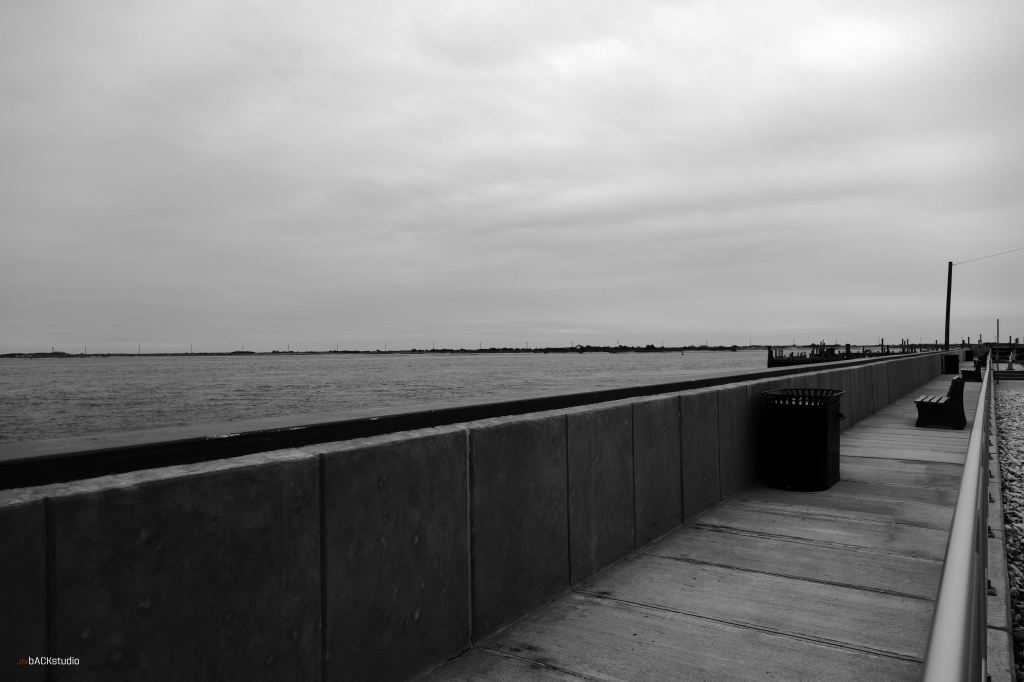
Sigma Bf, Sigma 24mm 3.5 – JPEG “Mono” setting with tweaked contrast.

Sigma Bf, Lumix S 85mm 1.8 Tweaked and Cropped. Metering is similar to traditional metering non-digital type, the Bf does not seem to add boost to shadows in JPEG outputs out of camera. The Bf is certainly NOT an iPhone.
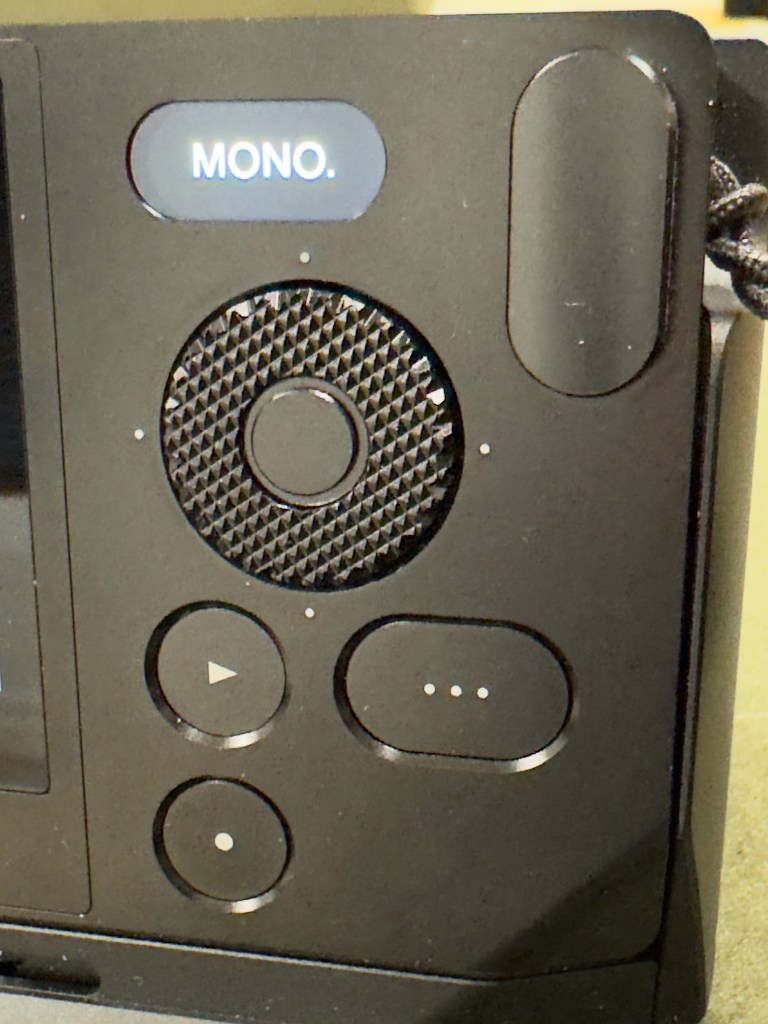
Getting used to shooting the Bf will be a challenge for some. You don’t just pick it up and make quick changes on the fly. You have to cycle through a menu via clicking the scroll wheel on the rear of the camera for certain settings. But there is a surprising amount of customization which can be achieved while using the camera. For example, rather than leave the rear setting indicator screen on the exposure setting option, it would better be used for a different setting. For example, I like to set my ISO settings between shots depending on the scene and lighting. I can set the rear indicator screen on ISO, set my Aperture by using the lens, and implement the half-pressed shutter press for exposure control. 3 controls can be used simultaneously with this method. If auto iso is used when shooting, the indicator screen can be left on JPG style, white balance, or what I feel more important, focus mode selection.

Sigma Bf, Lumix S 85mm 1.8 JPEG – levels tweaked for incorrect exposure settings
After you left or right click the wheel to select the option on your rear indicator screen, you simply scroll the wheel to adjust the higher menu options for that setting. I do notice, however, that this distinction between scrolling and clicking is what creates confusion for the new user, resulting in unintentional setting adjustments. Again, if in rush, this isn’t the camera for you. If, after clicking the wheel to find a setting and scrolling to an option in that setting, you can press the center button of the scroll wheel to access the lower or deeper menu options for that setting. These are usually settings that require less adjustments between shots. With a little thought about shooting style and preparation, it becomes clear that the system can be tweaked to work with shooting preferences. To a degree…it is nothing like a DSLR’s controls with direct button access, but it is a great compromise to avoid clutter and distraction when taking pics.

Sigma Bf, Lumix S 85mm 1.8 JPEG tweaked and vertically straightened

Sigma Bf, Lumix S 85mm 1.8 JPEG SOC
The camera’s ergonomics are a double edged sword (Excuse four avoided). While I love the look of the camera and its feel with a prime lens for shooting in the house at family functions or short durations, it isn’t possible to hold it long term very comfortably without holding it by the lens or hanging it around your neck. Which brings up two short comings: the camera isn’t designed for a traditional neck strap attachment and the textured face on the grip side of the camera isn’t exactly enough to get a good hold on the body. The rear thumb grip placement is in a good location and the chamfered bottom corners go a long way to making the body more pleasurable to hold. However, within a week of owning the camera, the grip was purchased and hasn’t come off since. It comes especially in handy if a one handed or rotated photo is taken.
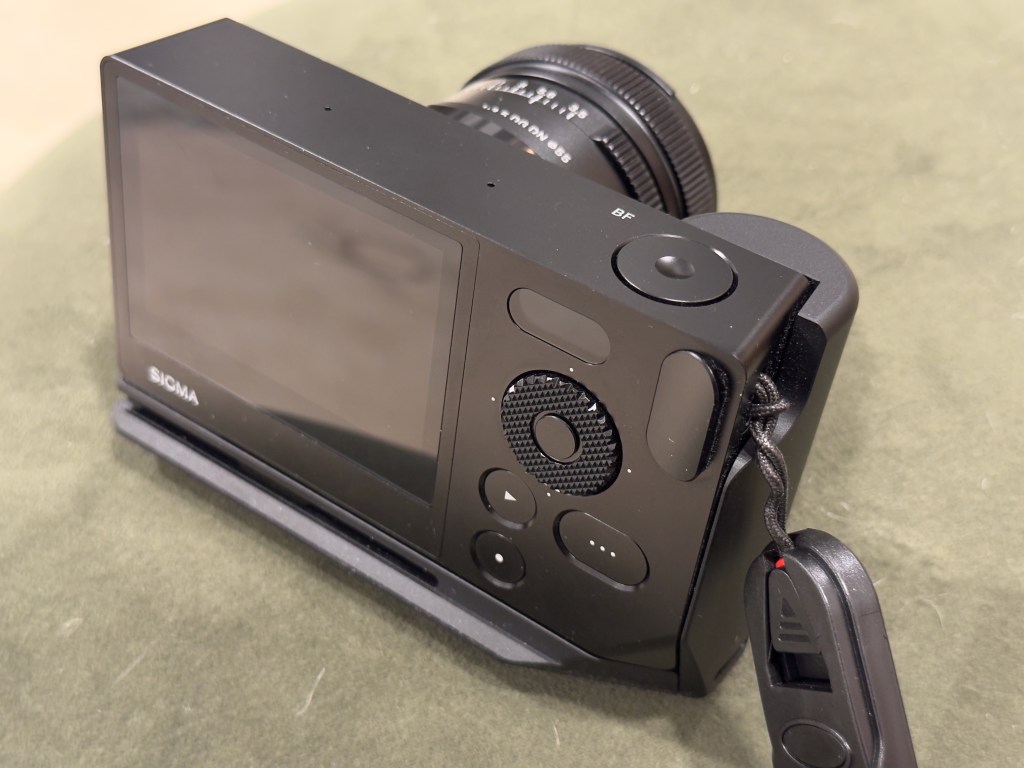
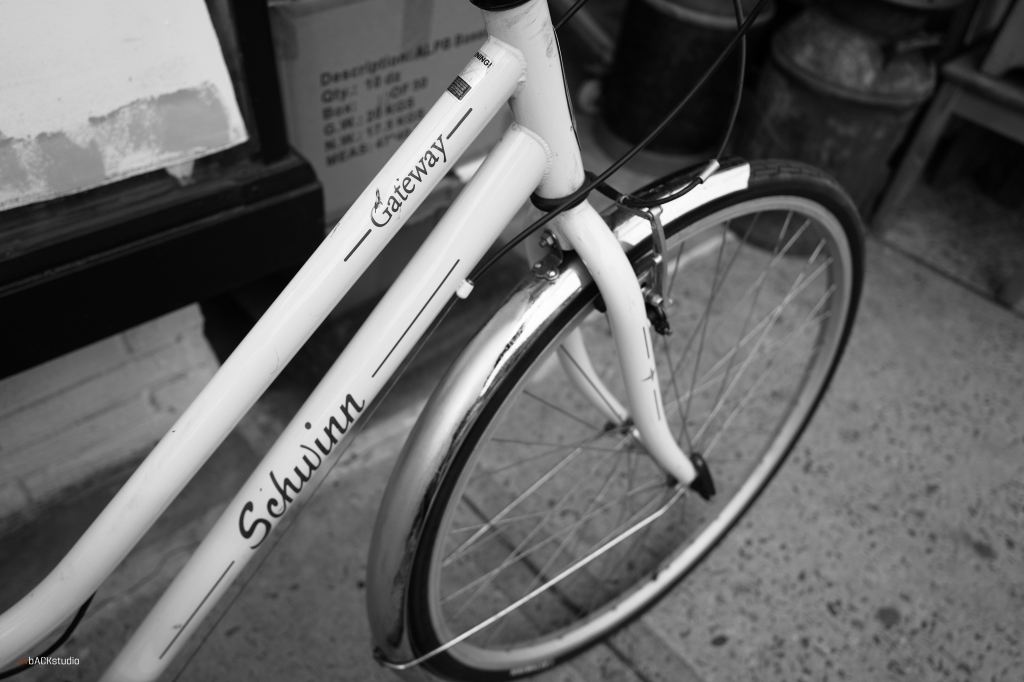
Sigma Bf, Sigma 24mm 3.5 JPEG SOC

Sigma Bf, Lumix S 85mm 1.8 JPEG SOC

Sigma Bf, Lumix S 85mm 1.8 JPEG Slightly Tweaked
I wanted a camera that is somewhat compact. I spend most of my time photographing my travels and short day trip excursions. I have eschewed zoom lenses recently, giving up the flexibility of the zoom, but haven’t fooled myself into believing something more compact isn’t necessarily more portable. Carrying around three smallish prime lenses is a strange alternative to portability when compared to leaving one lens on the camera permanently. However, in the hand, one feels much more compact than the other and this is the distinction I will make here: a camera can travel light and compact as well as shoot light and compact. The criteria for both depends on the lenses used, the body/lens shape, body/lens material, body/lens weight and ultimately, overall design of the final elements used together. It becomes obvious with full frame sensor cameras, that traveling light and small does not lend itself well to the format and requires a careful amount of planning and shooting style to accommodate this type of setup. Single prime lens options exist for the purpose of traveling very light, but of course, result in a sacrifice of flexibility. It is a contradiction that is, for most, irreconcilable. If portability and compactness is your main criteria, the solution presents itself with an APS-C system or the micro 4/3 system. If, however, your style of shooting and photography leaves you wanting for more capability or higher quality images (not saying full frame cameras deliver this as a given) along with other benefits of the larger sensor, you have to choose with compromise; and this is where priorities must be made.
Fact: A purchase is as emotional as it is practical, especially when it isn’t used for business or productivity.

Sigma Bf, Lumix S 85mm 1.8 JPEG Vignette added

Sigma Bf, Sigma 24mm 3.5 JPEG
It became clear to me that as I fabricated the multitude of reasons to buy the Bf, that I’ve been kicking around the idea of a purchase of a full frame system for more than a year. Until I saw the Bf camera advertised, nothing grabbed my attention emotionally. Perhaps the Leica Cl and TL2 enticed me with the smaller sensor sizes and compact bodies, but the cost of investing in these APS-C systems didn’t feel like the value I was seeking (add Fuji to that list as well). And while a camera without an EVF is a deal breaker for many, I was using my Nikon Coolpix A pocketable camera on travels recently and accustomed to a screen only experience (like my phone for instance). In fact, the EVF on my GX-9 Panasonic was not a very good one, and with glasses, more difficult to use, so that increasingly became a screen shooter for me.

Sigma Bf, Lumix S 85mm 1.8 JPEG Vignette Added

Sigma Bf, Sigma 24mm 3.5 JPEG SOC

Sigma Bf, Lumix S 85mm 1.8 Monotone Tweaked
The bottom of the camera consists of a mounting thread for a tripod or similar accessory. The JJC grip (and most others for that matter) screw into this thread for attachment to the Bf. The battery is accessible through a cut out in the grip and its bottom forms part of the bottom of the camera. There is no separate door for the battery compartment as the bottom of the battery molds and fits flush with the bottom of the camera. The grip adds a little stability to the camera via increasing the width the its bottom.
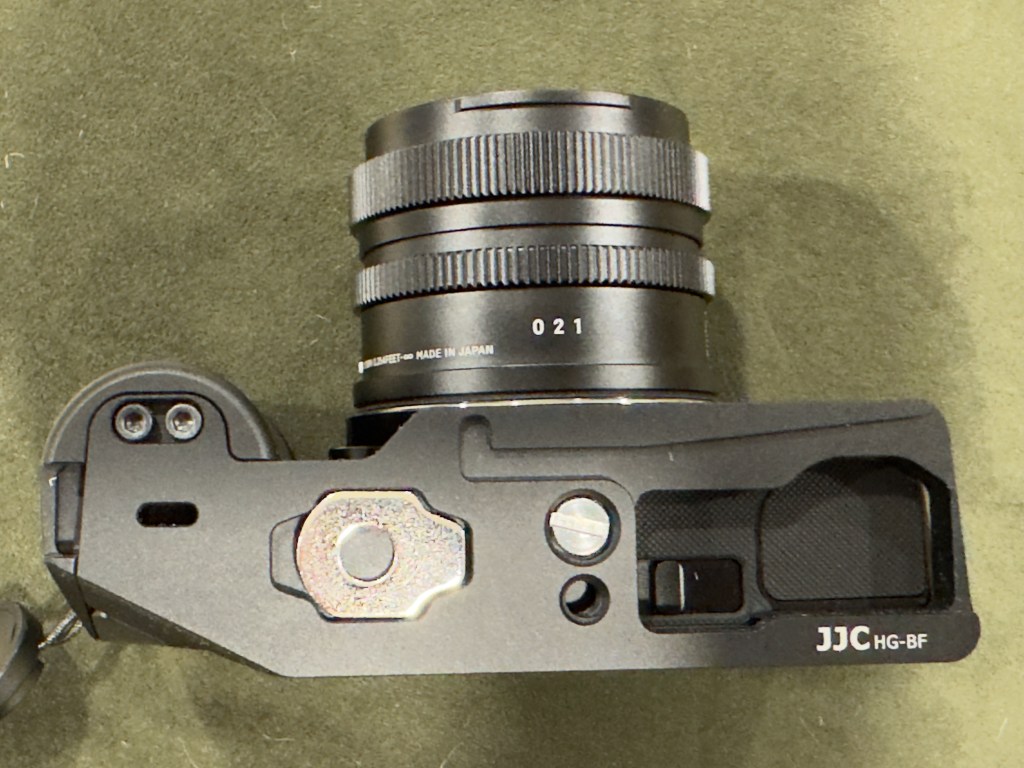
The camera with grip isn’t particularly heavy, but also not a lightweight. Comparatively speaking, the grip will make the camera heavier. The regular camera is about the same weight as any other compact full frame. The grip makes it slightly heavier. The camera works beautifully with primes up to 85mm in length (personal opinion). The larger Sigma lenses are a little heavy for the camera, and not the best way, in my opinion, to use the camera to its strengths.
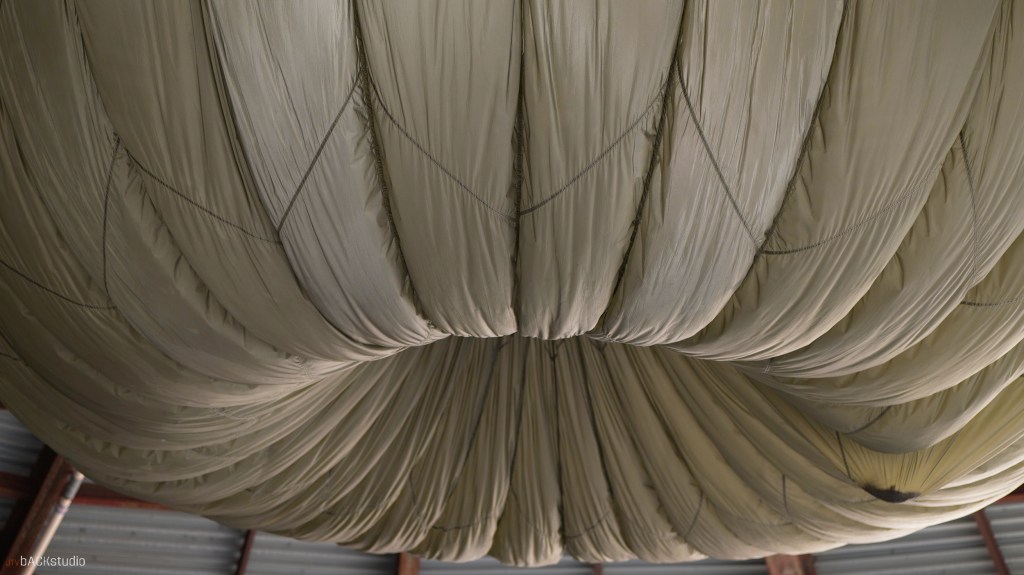
Sigma Bf, Lumix S 85mm 1.8 JPEG Cropped

Sigma Bf, Sigma 24mm 3.5 JPEG Tweaked

Sigma Bf, Sigma 24mm 3.5 JPEG Tweaked
Overall my biggest criticism of the camera are the JPEG outputs. The JPEG conversions could be a little cleaner, in my opinion, as the DNG outputs from this camera are beautiful with very good dynamic range and no noise. The camera avoids the tendency to blur the JPEG image in by avoiding the application of little-or-no noise reduction. JPEG images are limited by the color depth so they are inherently noisier, yet DNG->JPEG conversions from Capture One, Photomator, Photos (macOS) all result in what appear to be cleaner images. ISO 4000 files are fairly clean from the camera as DNG files direct from the sensor. In fact, they are very good. Here is an ISO 4000 jpeg conversion from a RAW file:
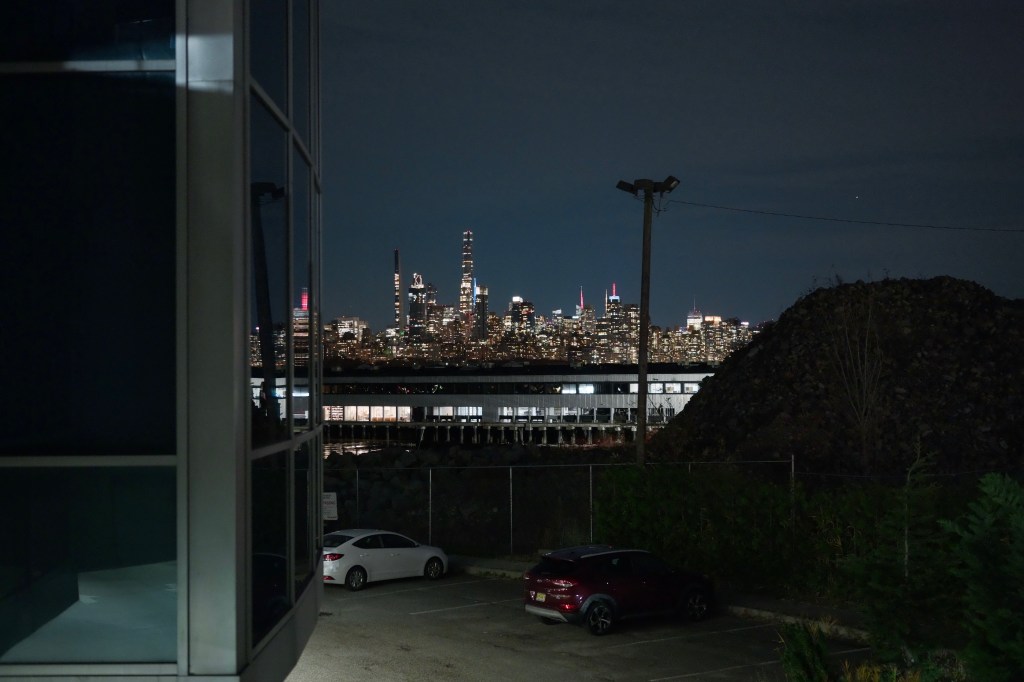
Sigma Bf, Sigma 45mm 2.8 JPEG screen shot, ignore the poor exposure, shake and composition

Enlarged screen shot of original above. Note that the magnification is significant.

Sigma Bf, Sigma 24mm 3.5
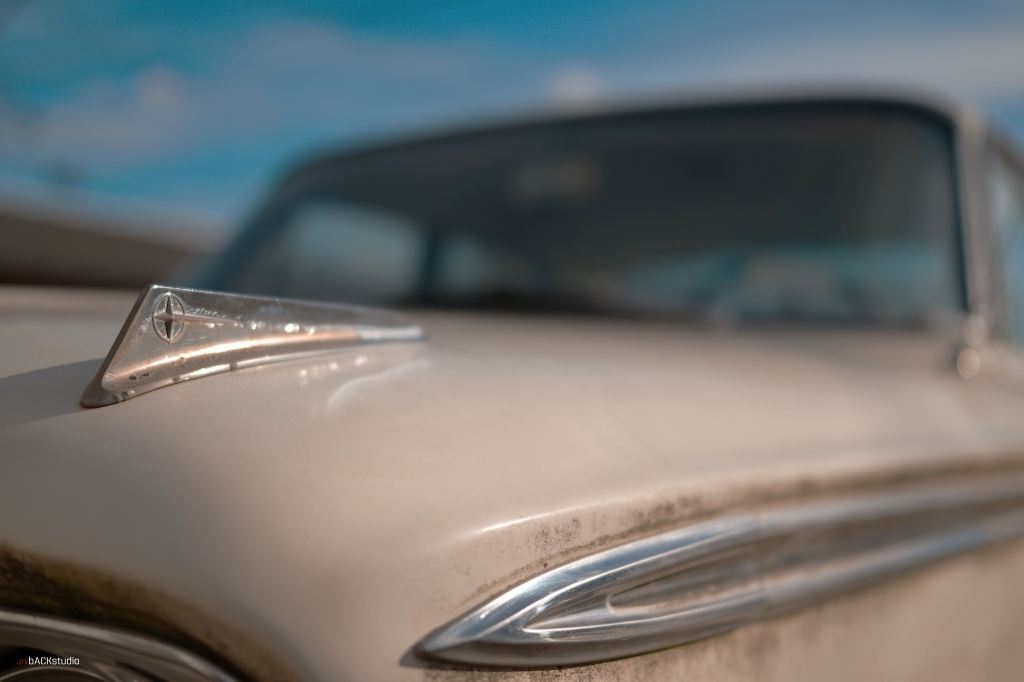
Sigma Bf, Sigma 45mm 2.8 JPEG “Rich” setting
When I think about my previous cameras, all of them demanded some time of compromise and this camera is no different in that regard. But it’s nice to know that when you compromise on some type of trade-off between functionality, ease of use and compact portability, that the design of this camera is one to be admired.
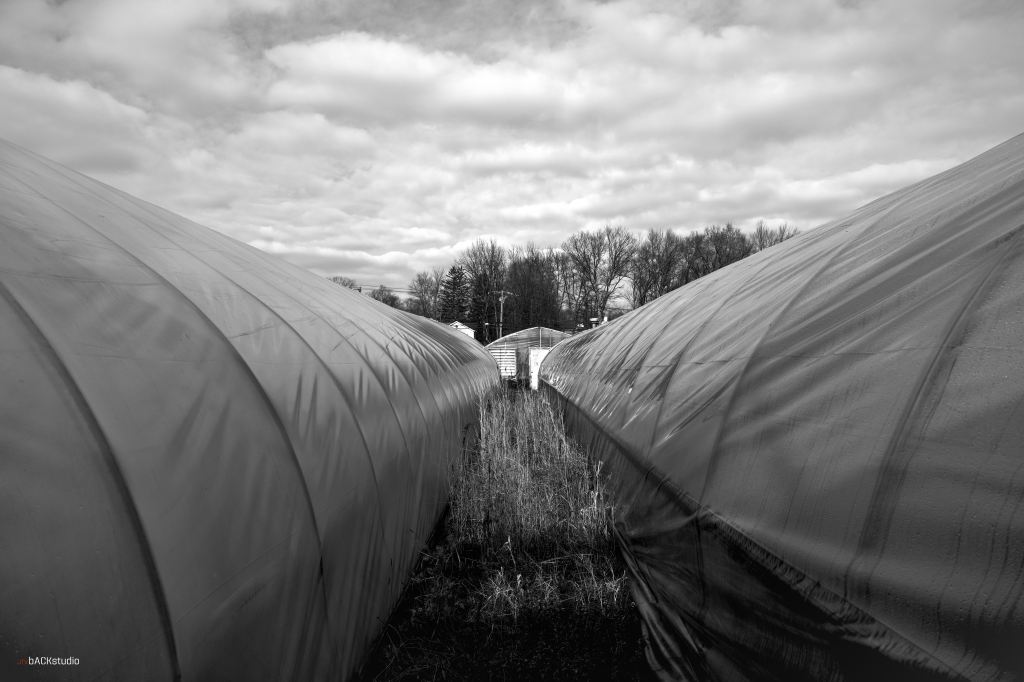
Sigma Bf, Sigma 24mm 3.5 DNG Conversion to B/W (not in camera)

Sigma Bf, Sigma 24mm 3.5 DNG conversion to jpg color (not in camera)

Sigma Bf, Sigma 24mm 3.5 JPG “Monotone” tweaked
After reading my post, and sitting with it a few days, I decided, in the most unprofessional manner, to add this codicil:
When answering the question titled in this post I must resort to a list of some positive and negative attributes first:
The camera’s positives include great image quality, beautiful color rendition, stunning design, compactness with some primes, portability with small zooms, a great feel in hand, very good rear screen, great build quality, fast photo transfers, nice “LUTS” or jpg filters, l-mount lens system compliance, and a pride of ownership score that is off the charts.
Negatives include a difficult handling for larger hands and long periods, especially with larger lenses, a menu driven experience with fewer buttons to directly access shooting modes and settings, a need for a grip to make long term use and larger lenses more comfortable (thereby ruining some of the design-the IDS grip seems like the most complimentary of the camera, and most expensive, and a potential for the camera to become a “fluke” in the system considered unfit for professionals or those that take photography “very seriously.” Weakish battery life isn’t a plus (it can be better managed with firmware, I believe, in the future and buying a spare is an easy if not expensive option (as is a portable batter pack). Most importantly, if you aren’t willing to change the method in which you take pictures (being set in your ways of success), the idea of relearning or adjusting your methods may be VERY unappealing to you.
This is a camera for someone who still feels attached to their gear in a more personal way than a professional. In contradiction to that statement it can also serve as a great camera for the professional that wants to rekindle their love of the l-mount system with a device that forces them to rethink their approach to photography. It may appeal to L-mount users who wish to own a third “for fun” camera. It is, above all else, a camera that in my opinion, will become a future collector’s item because of its low volume production, unique configuration, stunning design and wonderful photo quality. It may even become the pride of the l-mount system as one of their special cameras, which to many, may mean absolutely nothing. Some may consider it a pariah. I have consistently received compliments on the unit in its first few weeks of ownership from those that nod and say “very nice” to those not even interested in photography complimenting the look of the camera. My opinion? If it does the job I want it to do, and I feel satisfied using it, what more could I want? Answer: The magic of being forced to see the world slightly differently than I did before, if that’s even possible. I believe that is what limitations do for the artist and perhaps, the limitations of the device are its most important feature sets. For some.
Thanks!
Amazing photographs, love the use of light and dark. The cell phone image is very powerful.



 Amateur in photography. Amateur in life.
Leave a comment